Nebula
A nebula is a giant cloud of gas (mostly hydrogen and helium) and cosmic dust situated between stars in the interstellar medium. Nebulae serve as sites of stellar birth and death—including emission nebulae that glow from ionized gas, reflection nebulae that scatter starlight, and dark nebulae that obscure background stars.
Source: science.nasa.gov
APODs including "Nebula"
Star Formation in the Tadpole Nebula
18/11/2014
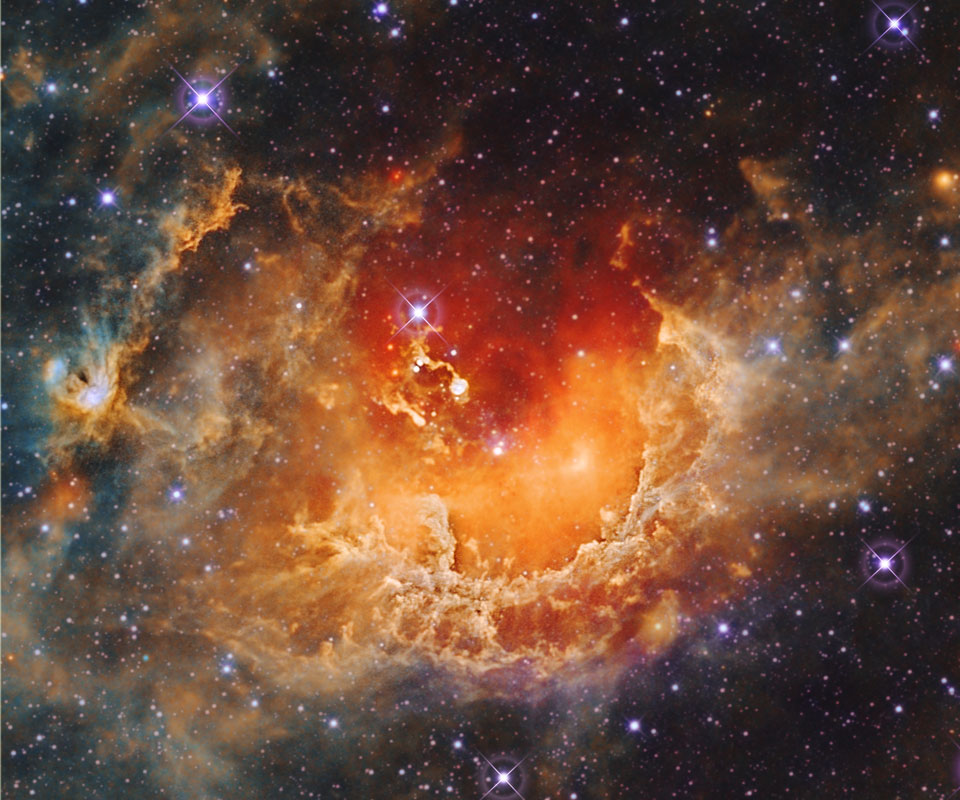
Dusty emission in the Tadpole nebula, IC 410, lies about 12,000 light-years away in the northern constellation Auriga. The cloud of glowing gas is over 100 light-years across, sculpted by stellar winds and radiation from embedded open star cluster NGC 1893. Formed in the interstellar cloud a mere 4 million years ago, bright cluster stars are seen all around the star-forming nebula. Notable near the image center are two relatively dense streamers of material trailing away from the nebula's central regions. Potentially sites of ongoing star formation in IC 410, these cosmic tadpole shapes are about 10 light-years long. The featured image was taken in infrared light by NASA's Wide Field Infrared Survey Explorer (WISE) satellite. Now Available: APOD 2015 Wall Calendars