Nebula
A nebula is a giant cloud of gas (mostly hydrogen and helium) and cosmic dust situated between stars in the interstellar medium. Nebulae serve as sites of stellar birth and death—including emission nebulae that glow from ionized gas, reflection nebulae that scatter starlight, and dark nebulae that obscure background stars.
Source: science.nasa.gov
APODs including "Nebula"
NGC 7635: Bubble in a Cosmic Sea
23/11/2016
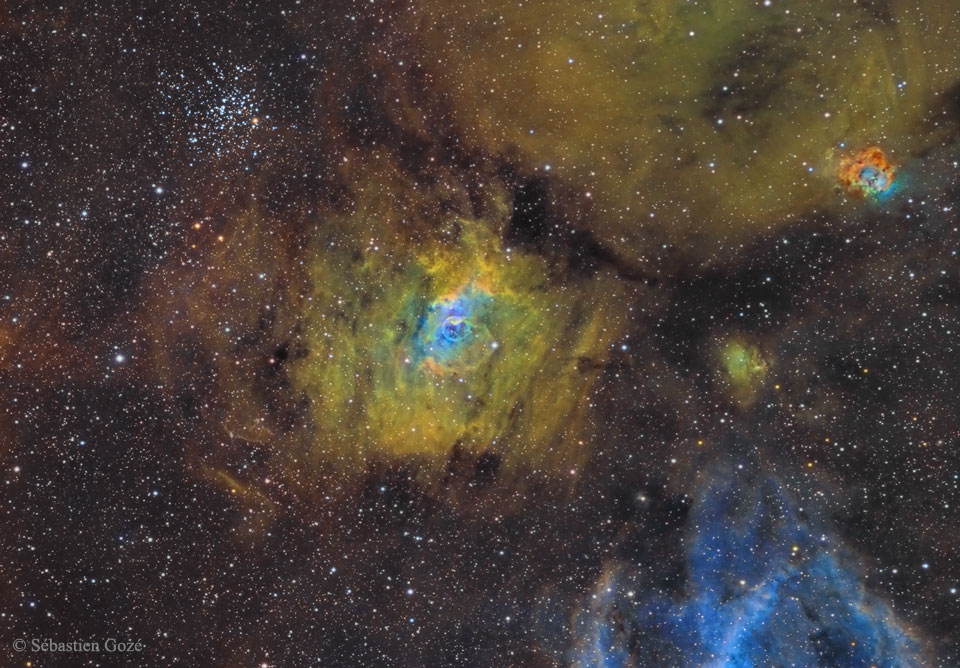
Do you see the bubble in the center? Seemingly adrift in a cosmic sea of stars and glowing gas, the delicate, floating apparition in this widefield view is cataloged as NGC 7635 - The Bubble Nebula. A mere 10 light-years wide, the tiny Bubble Nebula and the larger complex of interstellar gas and dust clouds are found about 11,000 light-years distant, straddling the boundary between the parental constellations Cepheus and Cassiopeia. Also included in the breathtaking vista is open star cluster M52 (upper left), some 5,000 light-years away. The featured image spans about two degrees on the sky corresponding to a width of about 375 light-years at the estimated distance of the Bubble Nebula. Follow APOD on: Facebook, Google Plus, Instagram, or Twitter