Nebula
A nebula is a giant cloud of gas (mostly hydrogen and helium) and cosmic dust situated between stars in the interstellar medium. Nebulae serve as sites of stellar birth and death—including emission nebulae that glow from ionized gas, reflection nebulae that scatter starlight, and dark nebulae that obscure background stars.
Source: science.nasa.gov
APODs including "Nebula"
Saturn in the Milky Way
10/06/2017
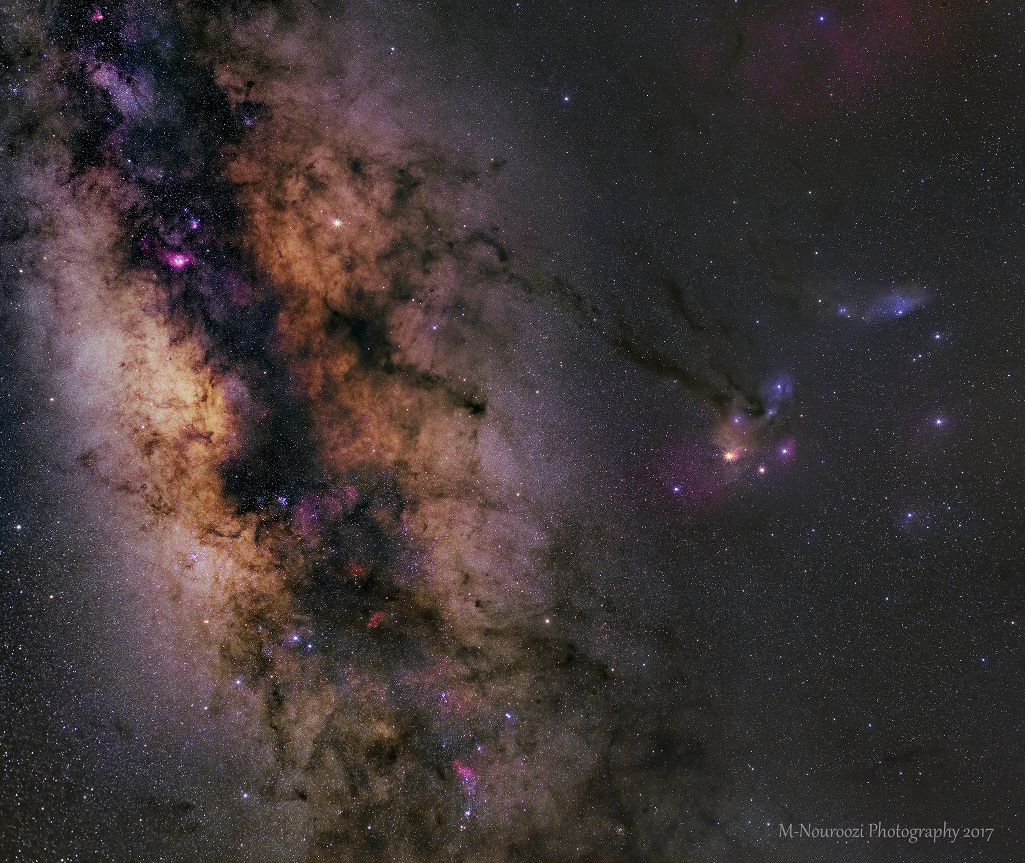
Saturn is near opposition in planet Earth's sky. Rising at sunset and shining brightly throughout the night, it also lies near a line-of-sight to crowded starfields, nebulae, and obscuring dust clouds along the Milky Way. Whitish Saturn is up and left of center in this gorgeous central Milky Way skyscape, a two panel mosaic recorded earlier this month. You can find the bright planet above the bowl of the dusty Pipe nebula, and just beyond the end of a dark river to Antares, alpha star of the constellation Scorpius. For now the best views of the ringed giant planet are from the Saturn-orbiting Cassini spacecraft, though. Diving close, Cassini's Grand Finale orbit number 8 is in progress.