Nebula
A nebula is a giant cloud of gas (mostly hydrogen and helium) and cosmic dust situated between stars in the interstellar medium. Nebulae serve as sites of stellar birth and death—including emission nebulae that glow from ionized gas, reflection nebulae that scatter starlight, and dark nebulae that obscure background stars.
Source: science.nasa.gov
APODs including "Nebula"
The Great Nebula in Carina
13/06/2017
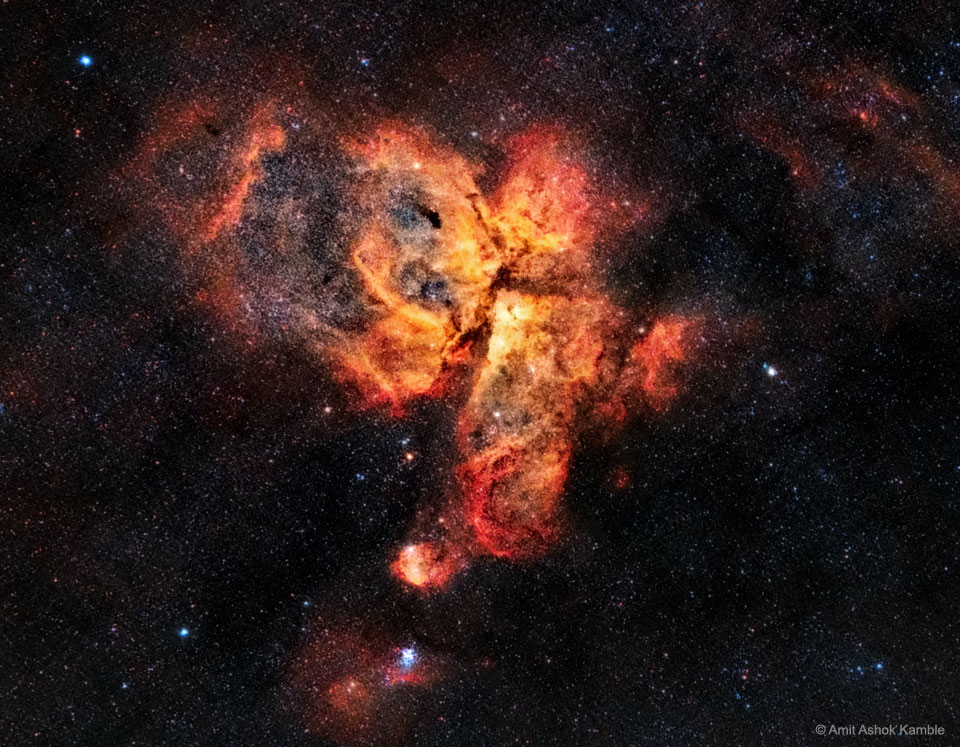
In one of the brightest parts of Milky Way lies a nebula where some of the oddest things occur. NGC 3372, known as the Great Nebula in Carina, is home to massive stars and changing nebulas. The Keyhole Nebula (NGC 3324), the bright structure just to the right of the image center, houses several of these massive stars and has itself changed its appearance. The entire Carina Nebula, captured here, spans over 300 light years and lies about 7,500 light-years away in the constellation of Carina. Eta Carinae, the most energetic star in the nebula, was one of the brightest stars in the sky in the 1830s, but then faded dramatically. While Eta Carinae itself maybe on the verge of a supernova explosion, X-ray images indicate that much of the Great Nebula in Carina has been a veritable supernova factory. Free Presentation: APOD Editor to speak in Prague on June 30