Nebula
A nebula is a giant cloud of gas (mostly hydrogen and helium) and cosmic dust situated between stars in the interstellar medium. Nebulae serve as sites of stellar birth and death—including emission nebulae that glow from ionized gas, reflection nebulae that scatter starlight, and dark nebulae that obscure background stars.
Source: science.nasa.gov
APODs including "Nebula"
Pelican Nebula Close-up
03/08/2017
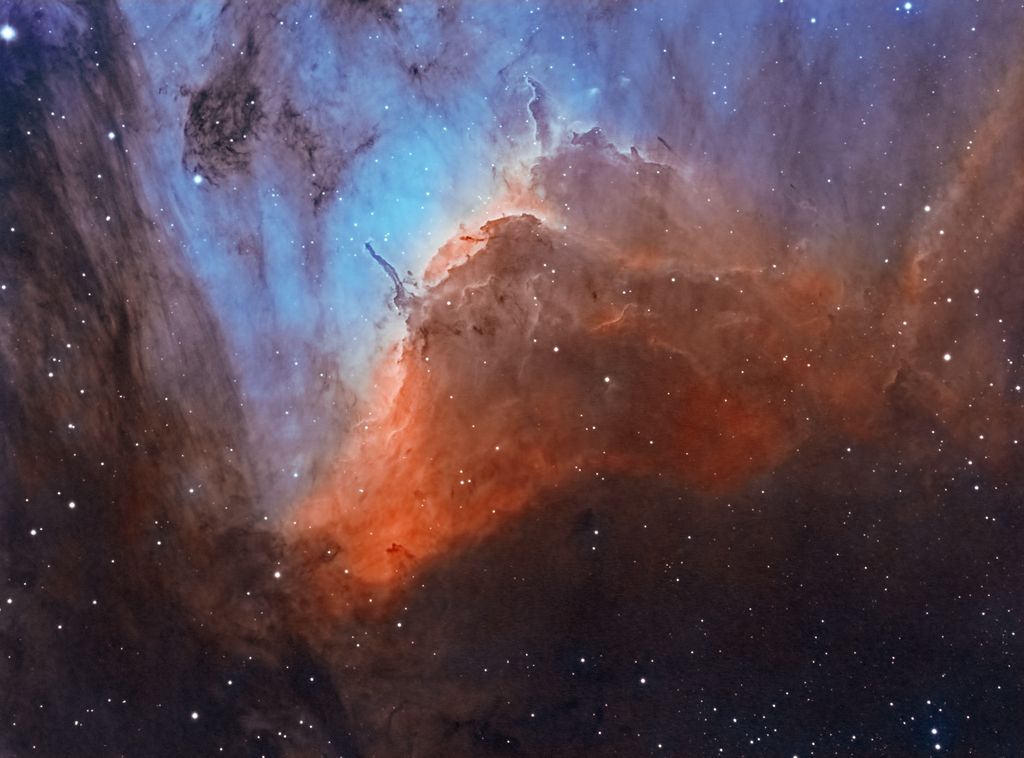
The prominent ridge of emission featured in this vivid skyscape is designated IC 5067. Part of a larger emission region with a distinctive shape, popularly called The Pelican Nebula, the ridge spans about 10 light-years and follows the curve of the cosmic pelican's head and neck. Fantastic, dark shapes inhabiting the view are clouds of cool gas and dust sculpted by energetic radiation from young, hot, massive stars. But stars are also forming within the dark shapes. Twin jets emerging from the tip of the long, dark tendril left of center are the telltale signs of an embedded protostar cataloged as Herbig-Haro 555 (HH 555). In fact, other Herbig-Haro objects indicating the presence of protostars are found within the frame. The Pelican Nebula itself, also known as IC 5070, is about 2,000 light-years away. To find it, look northeast of bright star Deneb in the high flying constellation Cygnus.