Nebula
A nebula is a giant cloud of gas (mostly hydrogen and helium) and cosmic dust situated between stars in the interstellar medium. Nebulae serve as sites of stellar birth and death—including emission nebulae that glow from ionized gas, reflection nebulae that scatter starlight, and dark nebulae that obscure background stars.
Source: science.nasa.gov
APODs including "Nebula"
HH 666: Carina Dust Pillar with Jet
06/12/2017
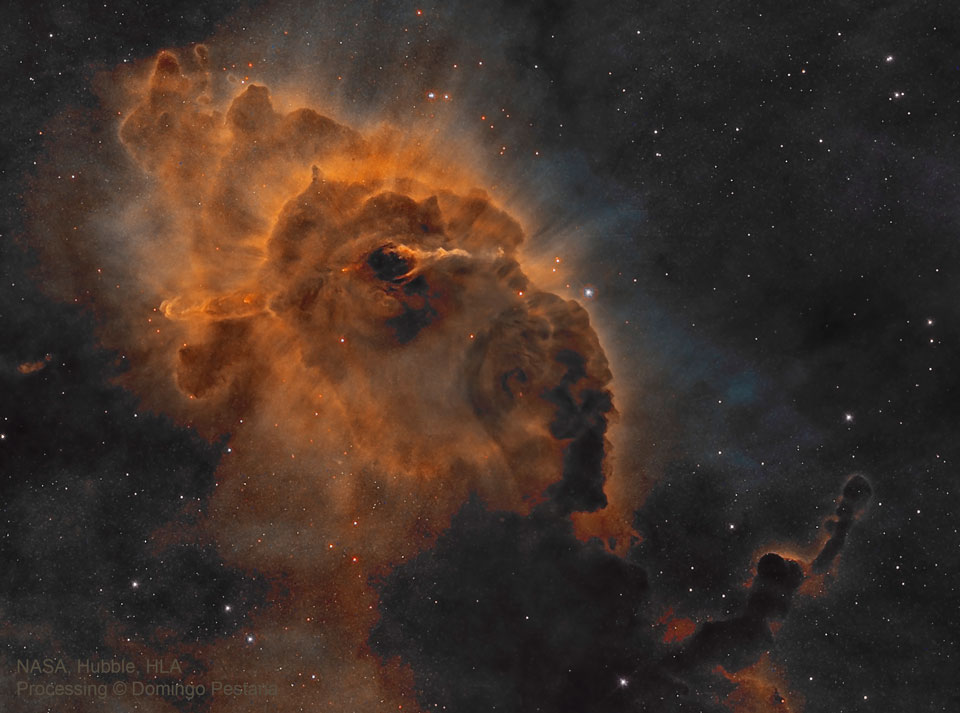
To some, it may look like a beehive harboring an evil bee. In reality, the featured Hubble image captures a cosmic pillar of dust, two-light years long, inside of which is Herbig-Haro 666 -- a young star emitting powerful jets. The structure lies within one of our galaxy's largest star forming regions, the Carina Nebula, shining in southern skies at a distance of about 7,500 light-years. The pillar's layered outline are shaped by the winds and radiation of Carina's young, hot, massive stars, some of which are still forming inside the nebula. A dust-penetrating view in infrared light better shows the two, narrow, energetic jets blasting outward from a still hidden infant star. Open Science: Browse 1,500+ codes in the Astrophysics Source Code Library