Nebula
A nebula is a giant cloud of gas (mostly hydrogen and helium) and cosmic dust situated between stars in the interstellar medium. Nebulae serve as sites of stellar birth and death—including emission nebulae that glow from ionized gas, reflection nebulae that scatter starlight, and dark nebulae that obscure background stars.
Source: science.nasa.gov
APODs including "Nebula"
Lyrid Meteor Streak
23/04/2020
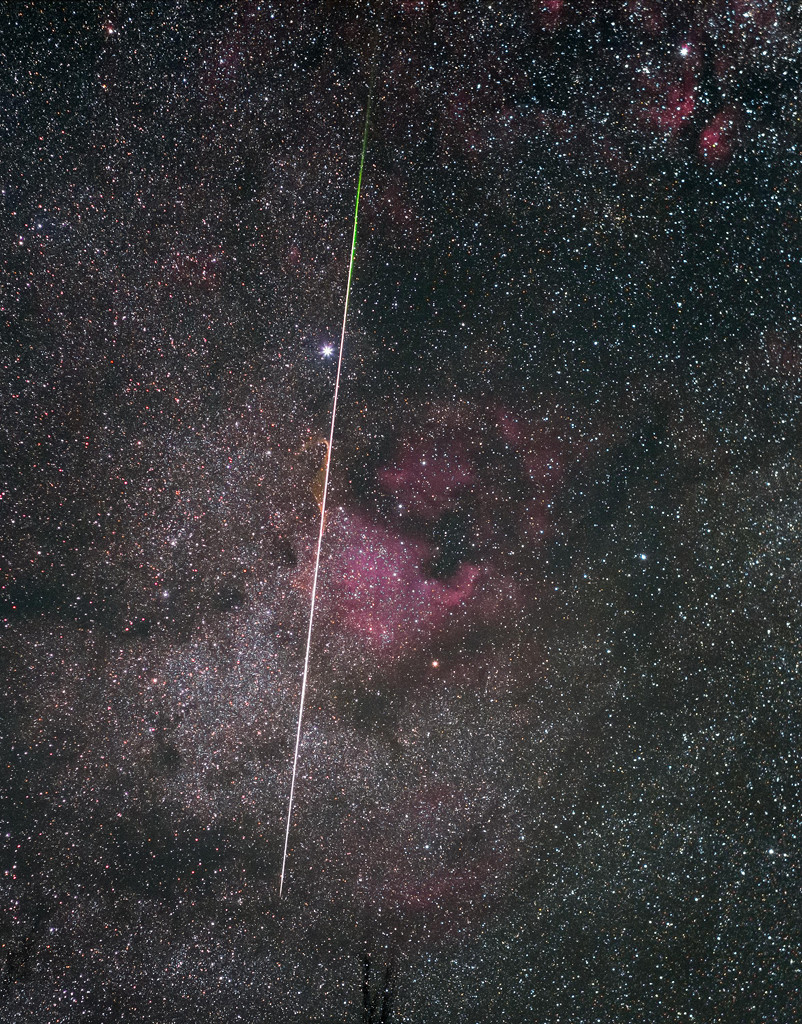
rth's annual Lyrid Meteor Shower peaked before dawn yesterday, as our fair planet plowed through debris from the tail of long-period comet Thatcher. In crisp, clear and moonless predawn skies over Brown County, Indiana this streak of vaporizing comet dust briefly shared a telephoto field of view with stars and nebulae along the Milky Way. Alpha star of the constellation Cygnus, Deneb lies near the bright meteor's path along with the region's dark interstellar clouds of dust and the recognizable glow of the North America nebula (NGC 7000). The meteor's streak points back to the shower's radiant, its apparent point of origin on the sky. That would be in the constellation Lyra, near bright star Vega and off the top edge of the frame. Celebrate the Night: International Dark Sky Week