Nebula
A nebula is a giant cloud of gas (mostly hydrogen and helium) and cosmic dust situated between stars in the interstellar medium. Nebulae serve as sites of stellar birth and death—including emission nebulae that glow from ionized gas, reflection nebulae that scatter starlight, and dark nebulae that obscure background stars.
Source: science.nasa.gov
APODs including "Nebula"
NGC 2244: A Star Cluster in the Rosette Nebula
21/02/2021
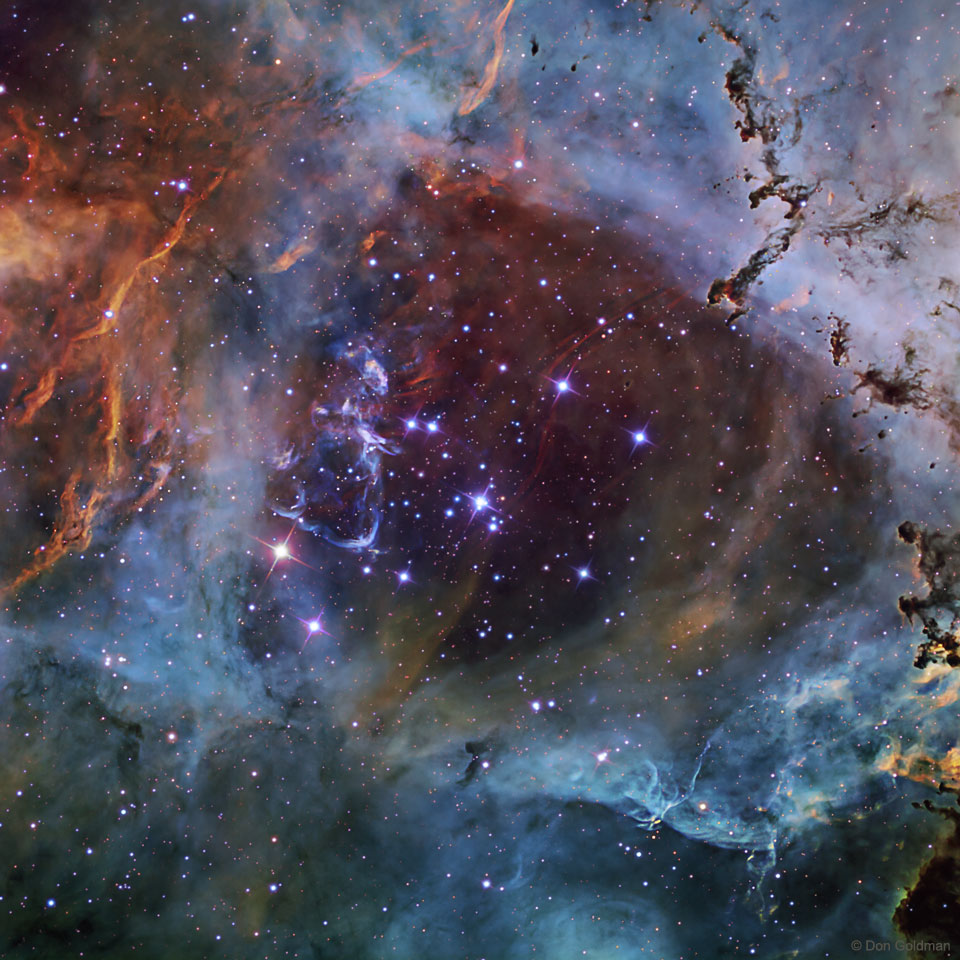
In the heart of the Rosette Nebula lies a bright open cluster of stars that lights up the nebula. The stars of NGC 2244 formed from the surrounding gas only a few million years ago. The featured image taken in January using multiple exposures and very specific colors of Sulfur (shaded red), Hydrogen (green), and Oxygen (blue), captures the central region in tremendous detail. A hot wind of particles streams away from the cluster stars and contributes to an already complex menagerie of gas and dust filaments while slowly evacuating the cluster center. The Rosette Nebula's center measures about 50 light-years across, lies about 5,200 light-years away, and is visible with binoculars towards the constellation of the Unicorn (Monoceros).