Nebula
A nebula is a giant cloud of gas (mostly hydrogen and helium) and cosmic dust situated between stars in the interstellar medium. Nebulae serve as sites of stellar birth and death—including emission nebulae that glow from ionized gas, reflection nebulae that scatter starlight, and dark nebulae that obscure background stars.
Source: science.nasa.gov
APODs including "Nebula"
Rings Around the Ring Nebula
18/08/2021
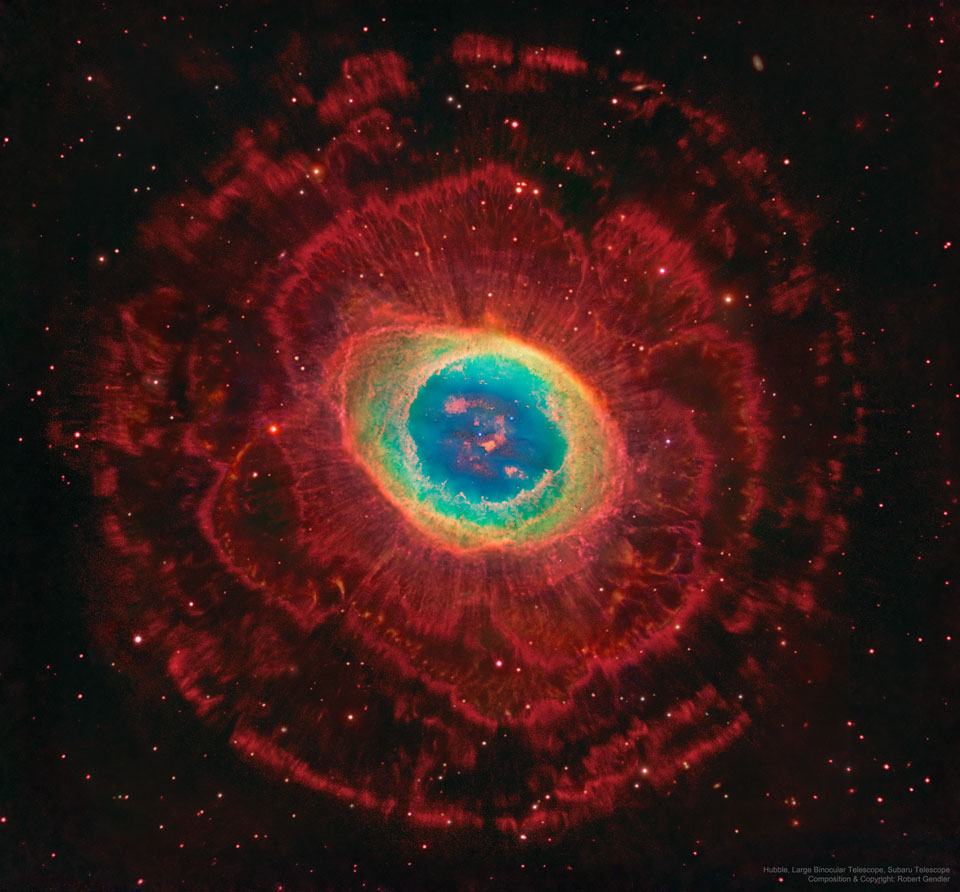
The Ring Nebula (M57), is more complicated than it appears through a small telescope. The easily visible central ring is about one light-year across, but this remarkably deep exposure - a collaborative effort combining data from three different large telescopes - explores the looping filaments of glowing gas extending much farther from the nebula's central star. This composite image includes red light emitted by hydrogen as well as visible and infrared light. The Ring Nebula is an elongated planetary nebula, a type of nebula created when a Sun-like star evolves to throw off its outer atmosphere to become a white dwarf star. The Ring Nebula is about 2,500 light-years away toward the musical constellation Lyra. Amateur Astronomers: Please take the Night Sky Network's Survey