Nebula
A nebula is a giant cloud of gas (mostly hydrogen and helium) and cosmic dust situated between stars in the interstellar medium. Nebulae serve as sites of stellar birth and death—including emission nebulae that glow from ionized gas, reflection nebulae that scatter starlight, and dark nebulae that obscure background stars.
Source: science.nasa.gov
APODs including "Nebula"
The Asymmetric Nebula Surrounding Wolf-Rayet Star 18
09/11/2022
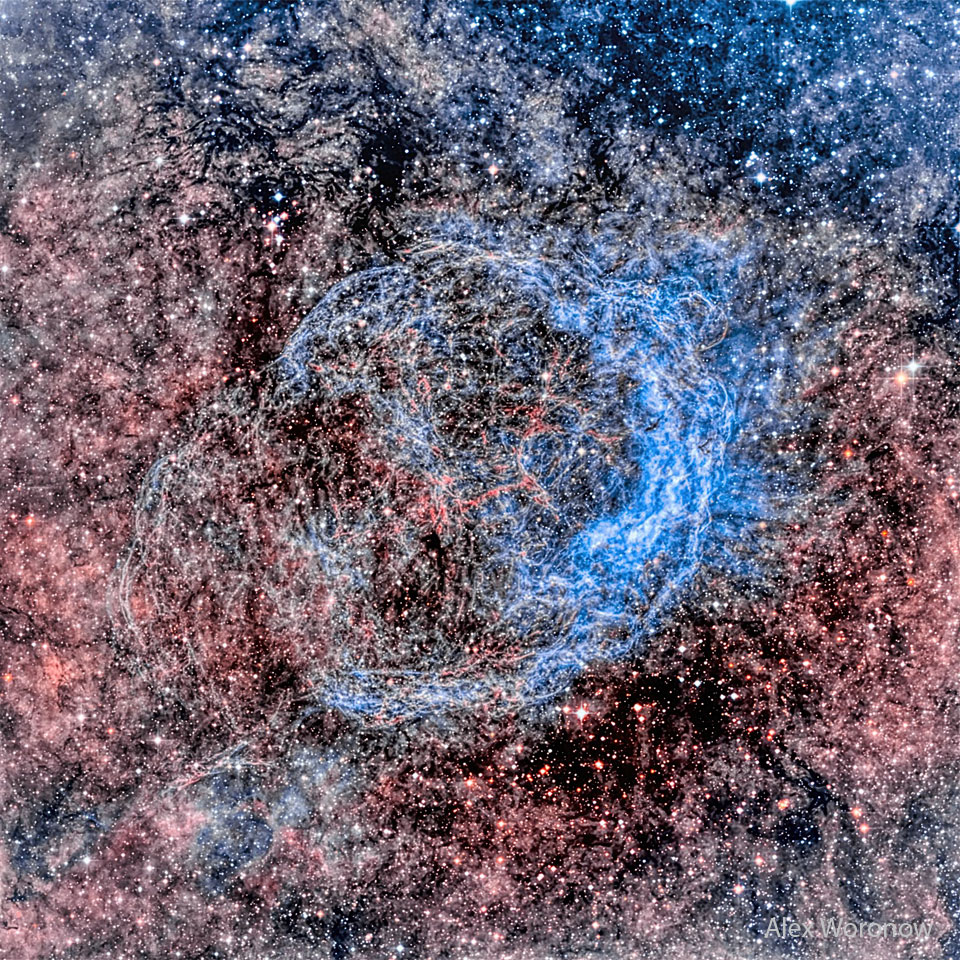
Why does the nebula around the star WR-18 shine brighter on one side? Also known as NGC 3199, this active star and its surrounding nebula lie about 12,000 light-years away toward the nautical southern constellation of Carina. The featured deep image has been highly processed to bring out filamentary details of the glowing gas in the bubble-shaped nebula. The nebula is about 75 light-years across. Near the nebula's center is a Wolf-Rayet star, WR-18, which is a massive, hot, short-lived star that generates an intense and complex stellar wind. In fact, Wolf-Rayet stars are known to create nebulas with interesting shapes as their powerful winds sweep up surrounding interstellar material. In this case, the bright right edge was initially thought to indicate that a bow shock was being produced as the star plowed through a uniform medium, like a boat through water. Recent measurements and analyses, however, have shown the star is not moving quickly toward the bright edge. A more likely explanation has emerged that the material surrounding the star is not uniform, but clumped and denser near the bright edge.