Nebula
A nebula is a giant cloud of gas (mostly hydrogen and helium) and cosmic dust situated between stars in the interstellar medium. Nebulae serve as sites of stellar birth and death—including emission nebulae that glow from ionized gas, reflection nebulae that scatter starlight, and dark nebulae that obscure background stars.
Source: science.nasa.gov
APODs including "Nebula"
The Pistachio Nebula
22/08/2023
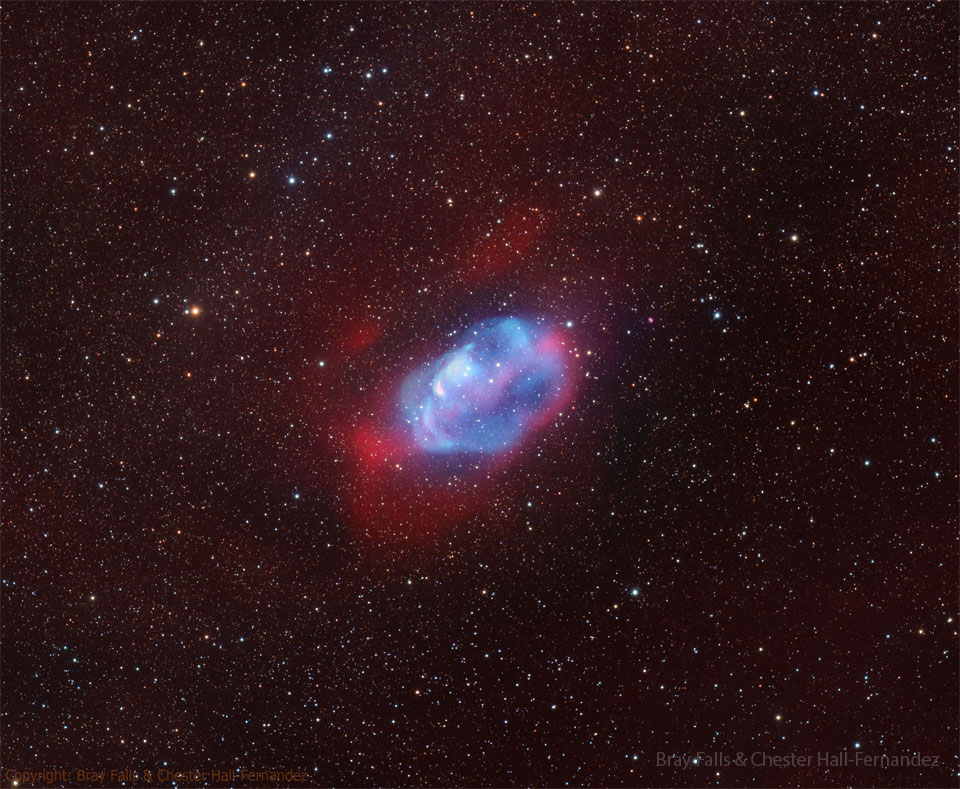
This nebula had never been noted before. Newly discovered nebulas are usually angularly small and found by professionals using large telescopes. In contrast, the Pistachio Nebula was discovered by dedicated amateurs and, although faint, is nearly the size of the full Moon. In modern times, amateurs with even small telescopes can create long exposures over sky areas much larger than most professional telescopes can see. They can therefore discover both previously unknown areas of extended emission around known objects, as well as entirely unknown objects, like nebulas. The pictured Pistachio Nebula is shown in oxygen emission (blue) and hydrogen emission (red). The nature of the hot central star is currently unknown, and the nebula might be labeled a planetary nebula if it turns out to be a white dwarf star. The featured image is a composite of over 70 hours of exposure taken in early June under the dark skies of Namibia.