Nebula
A nebula is a giant cloud of gas (mostly hydrogen and helium) and cosmic dust situated between stars in the interstellar medium. Nebulae serve as sites of stellar birth and death—including emission nebulae that glow from ionized gas, reflection nebulae that scatter starlight, and dark nebulae that obscure background stars.
Source: science.nasa.gov
APODs including "Nebula"
Dust and the Western Veil Nebula
18/10/2023
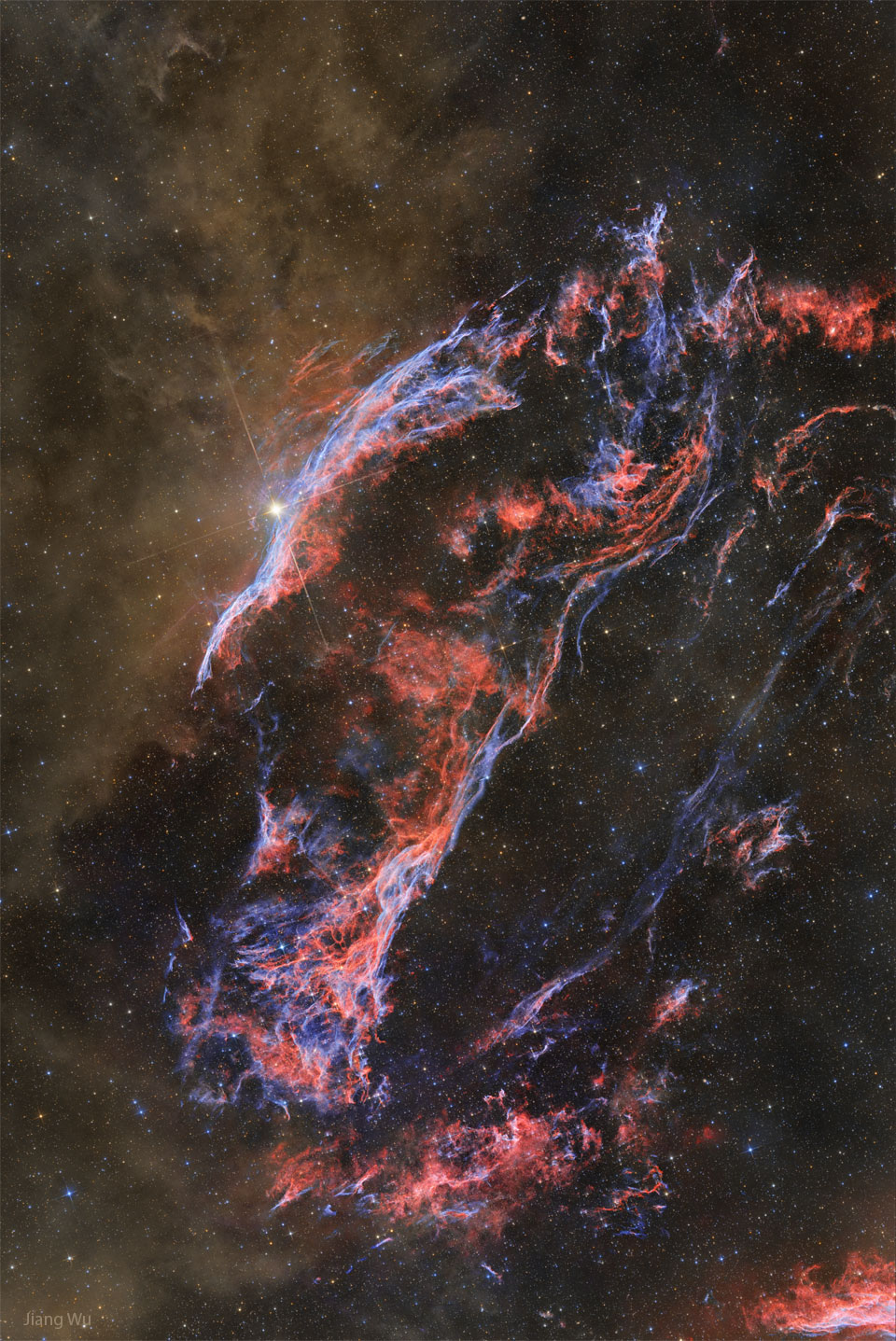
It's so big it is easy to miss. The entire Veil Nebula spans six times the diameter of the full moon, but is so dim you need binoculars to see it. The nebula was created about 15,000 years ago when a star in the constellation of the Swan (Cygnus) exploded. The spectacular explosion would have appeared brighter than even Venus for a week - but there is no known record of it. Pictured is the western edge of the still-expanding gas cloud. Notable gas filaments include the Witch's Broom Nebula on the upper left near the bright foreground star 52 Cygni, and Fleming's Triangular Wisp (formerly known as Pickering's Triangle) running diagonally up the image middle. What is rarely imaged -- but seen in the featured long exposure across many color bands -- is the reflecting brown dust that runs vertically up the image left, dust likely created in the cool atmospheres of massive stars.