Nebula
A nebula is a giant cloud of gas (mostly hydrogen and helium) and cosmic dust situated between stars in the interstellar medium. Nebulae serve as sites of stellar birth and death—including emission nebulae that glow from ionized gas, reflection nebulae that scatter starlight, and dark nebulae that obscure background stars.
Source: science.nasa.gov
APODs including "Nebula"
IC 5146: The Cocoon Nebula
19/08/2024
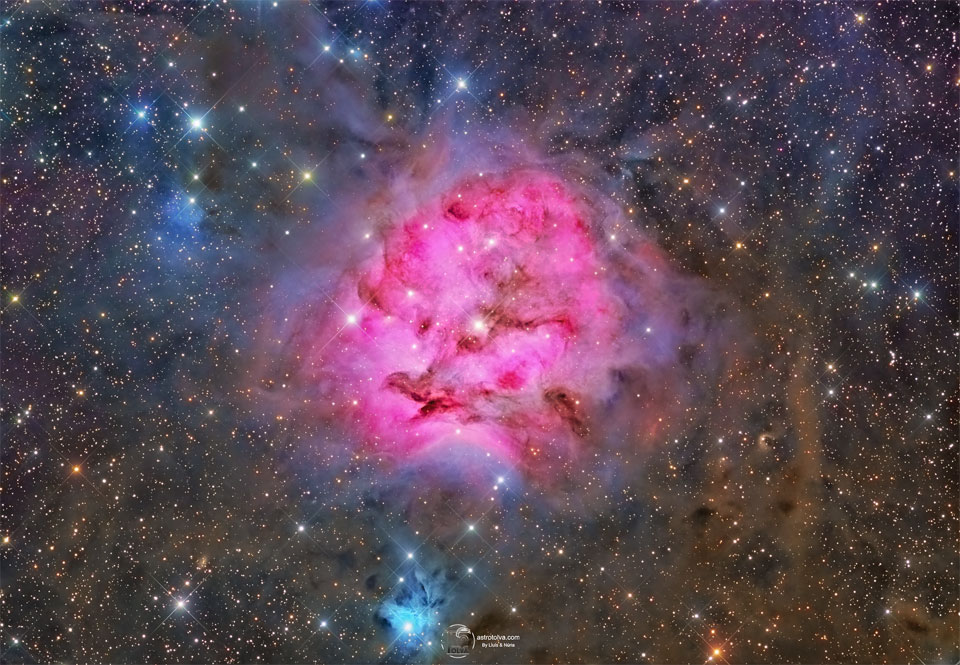
Inside the Cocoon Nebula is a newly developing cluster of stars. Cataloged as IC 5146, the beautiful nebula is nearly 15 light-years wide. Soaring high in northern summer night skies, it's located some 4,000 light years away toward the constellation of the Swan (Cygnus). Like other star forming regions, it stands out in red, glowing, hydrogen gas excited by young, hot stars, and dust-reflected starlight at the edge of an otherwise invisible molecular cloud. In fact, the bright star found near the center of this nebula is likely only a few hundred thousand years old, powering the nebular glow as it clears out a cavity in the molecular cloud's star forming dust and gas. A 48-hour long integration resulted in this exceptionally deep color view tracing tantalizing features within and surrounding the dusty stellar nursery.