Nebula
A nebula is a giant cloud of gas (mostly hydrogen and helium) and cosmic dust situated between stars in the interstellar medium. Nebulae serve as sites of stellar birth and death—including emission nebulae that glow from ionized gas, reflection nebulae that scatter starlight, and dark nebulae that obscure background stars.
Source: science.nasa.gov
APODs including "Nebula"
NGC 7293: The Helix Nebula
24/10/2024
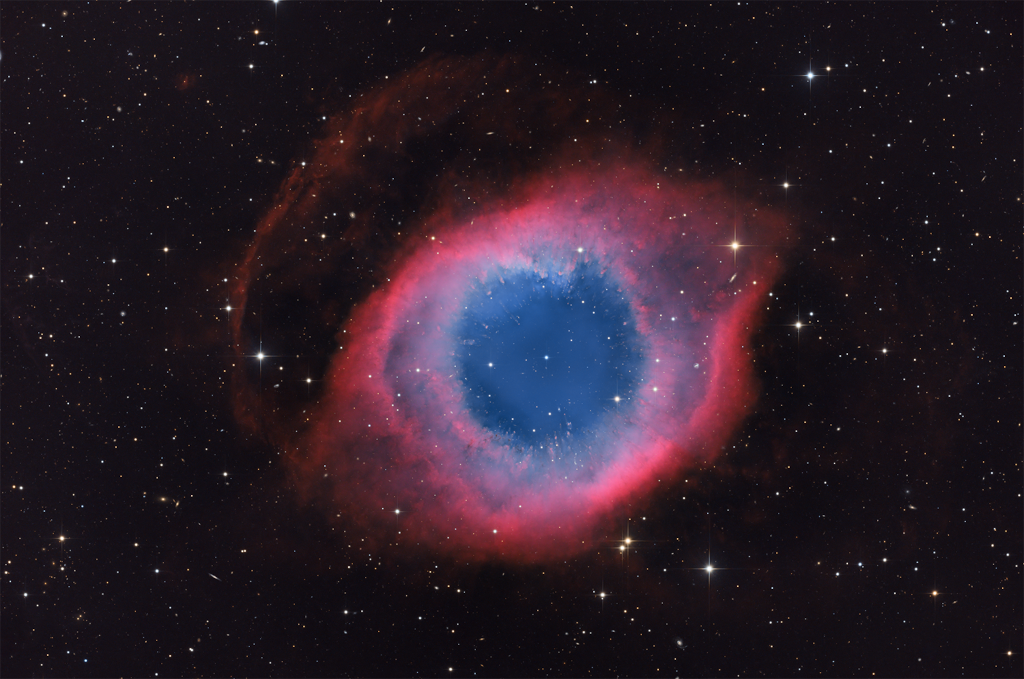
A mere seven hundred light years from Earth toward the constellation Aquarius, a star is dying. The once sun-like star's last few thousand years have produced the Helix Nebula. Also known as NGC 7293, the cosmic Helix is a well studied and nearby example of a Planetary Nebula, typical of this final phase of stellar evolution. Combining narrow band data from emission lines of hydrogen atoms in red and oxygen atoms in blue-green hues, this deep image shows tantalizing details of the Helix, including its bright inner region about 3 light-years across. The white dot at the Helix's center is this Planetary Nebula's hot, dying central star. A simple looking nebula at first glance, the Helix is now understood to have a surprisingly complex geometry.