Nebula
A nebula is a giant cloud of gas (mostly hydrogen and helium) and cosmic dust situated between stars in the interstellar medium. Nebulae serve as sites of stellar birth and death—including emission nebulae that glow from ionized gas, reflection nebulae that scatter starlight, and dark nebulae that obscure background stars.
Source: science.nasa.gov
APODs including "Nebula"
Stars and Dust in the Pacman Nebula
18/11/2024
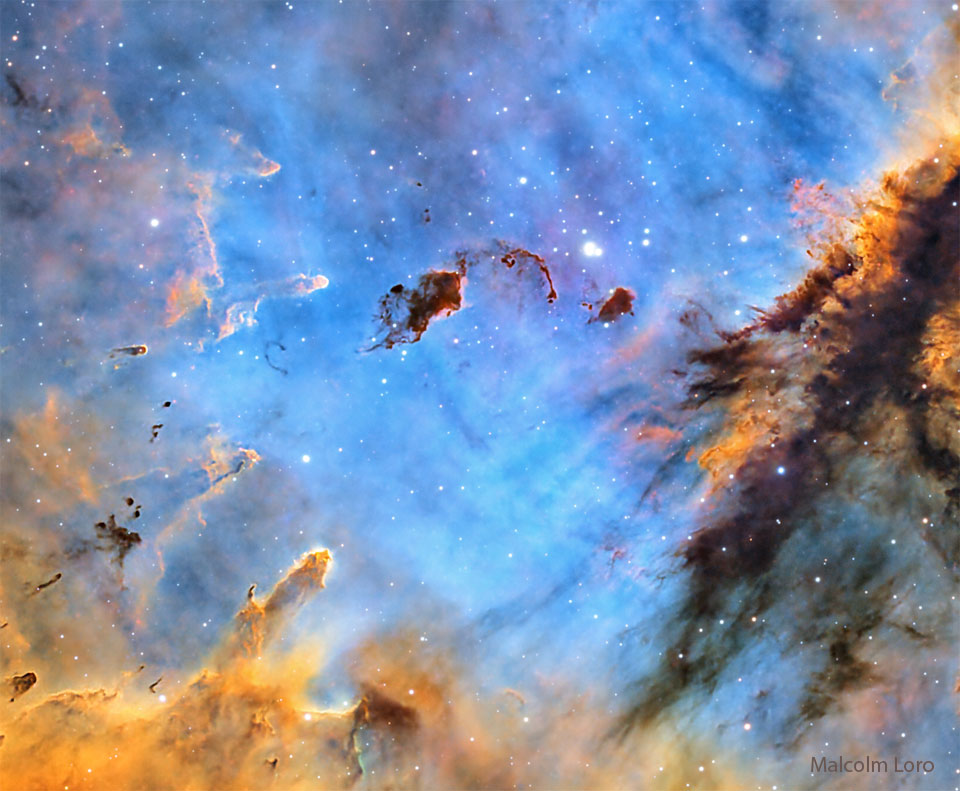
Stars can create huge and intricate dust sculptures from the dense and dark molecular clouds from which they are born. The tools the stars use to carve their detailed works are high energy light and fast stellar winds. The heat they generate evaporates the dark molecular dust as well as causing ambient hydrogen gas to disperse and glow. Pictured here, a new open cluster of stars designated IC 1590 is nearing completion around the intricate interstellar dust structures in the emission nebula NGC 281, dubbed the Pac-man Nebula because of its overall shape. The dust cloud just above center is classified as a Bok Globule as it may gravitationally collapse and form a star -- or stars. The Pacman Nebula lies about 10,000 light years away toward the constellation of Cassiopeia.