Perseid Meteor Shower
The Perseid Meteor Shower is a prolific annual meteor shower caused when Earth passes through the debris stream left by Comet 109P/Swift‑Tuttle. Active from mid‑July to late August, it peaks around August 12–13, producing up to ~50–100 meteors per hour under dark skies—many bright and fast enough to leave colorful wakes.
Source: science.nasa.gov
APODs including "Perseid Meteor Shower"
Aurora Persei
04/09/2000
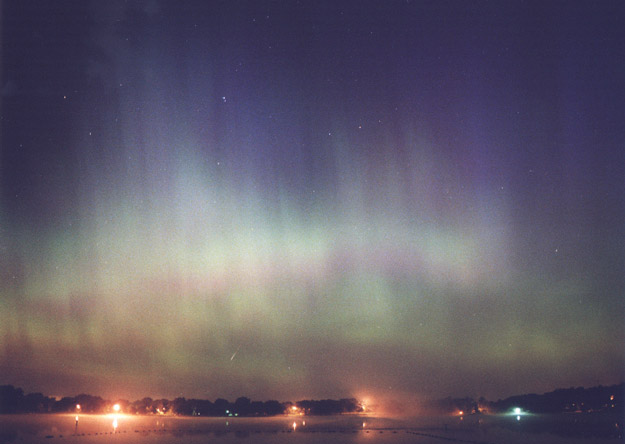
Last month, skywatchers were treated to an unexpected coincidence: bright aurorae occurred during the Perseid Meteor Shower. The above picture was taken August 12 and captures eerie looking aurorae and a faint Perseid meteor above Cross Lake in Wisconsin, USA. The near future holds promise for both more aurorae and a better meteor shower. Aurorae are becoming increasingly common as their trigger -- our Sun -- nears its period of highest activity during its eleven-year magnetic cycle. Coming up in mid-November is the quirky Leonids Meteor Shower. Although one of the better studied meteor showers, the Leonids have surprised astronomers many times and so many an optimistic skywatcher promises to be outside this year hoping for a memorable show.