Perseid Meteor Shower
The Perseid Meteor Shower is a prolific annual meteor shower caused when Earth passes through the debris stream left by Comet 109P/Swift‑Tuttle. Active from mid‑July to late August, it peaks around August 12–13, producing up to ~50–100 meteors per hour under dark skies—many bright and fast enough to leave colorful wakes.
Source: science.nasa.gov
APODs including "Perseid Meteor Shower"
Contemplating the Sky
13/08/2002
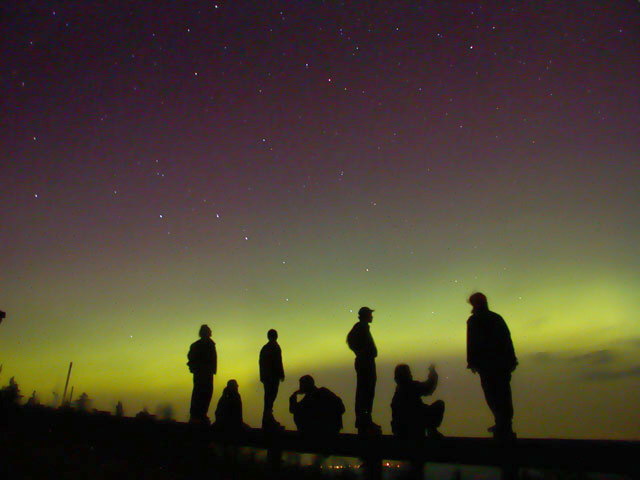
Have you contemplated your sky recently? Last night was a good one for midnight meditators at many northerly locations as meteors from the Perseid meteor shower frequently streaked through. The Perseid meteor shower has slowly been building to a crescendo but should continue to be rewarding tonight and into the week. Pictured above on August 1, a group of celestial sightseers near Quebec, Canada are treated to a dark and wondrous night sky that contained bright stars, green auroras, the band of our Milky Way galaxy, a majestic Moon rising, the International Space Station slowly gliding by, and the occasional flash of a Perseid meteor. Although no meteors were caught in this frame, the Big Dipper remained quite prominent.