Perseid Meteor Shower
The Perseid Meteor Shower is a prolific annual meteor shower caused when Earth passes through the debris stream left by Comet 109P/Swift‑Tuttle. Active from mid‑July to late August, it peaks around August 12–13, producing up to ~50–100 meteors per hour under dark skies—many bright and fast enough to leave colorful wakes.
Source: science.nasa.gov
APODs including "Perseid Meteor Shower"
Perseid Meteors and the Milky Way
15/08/2005
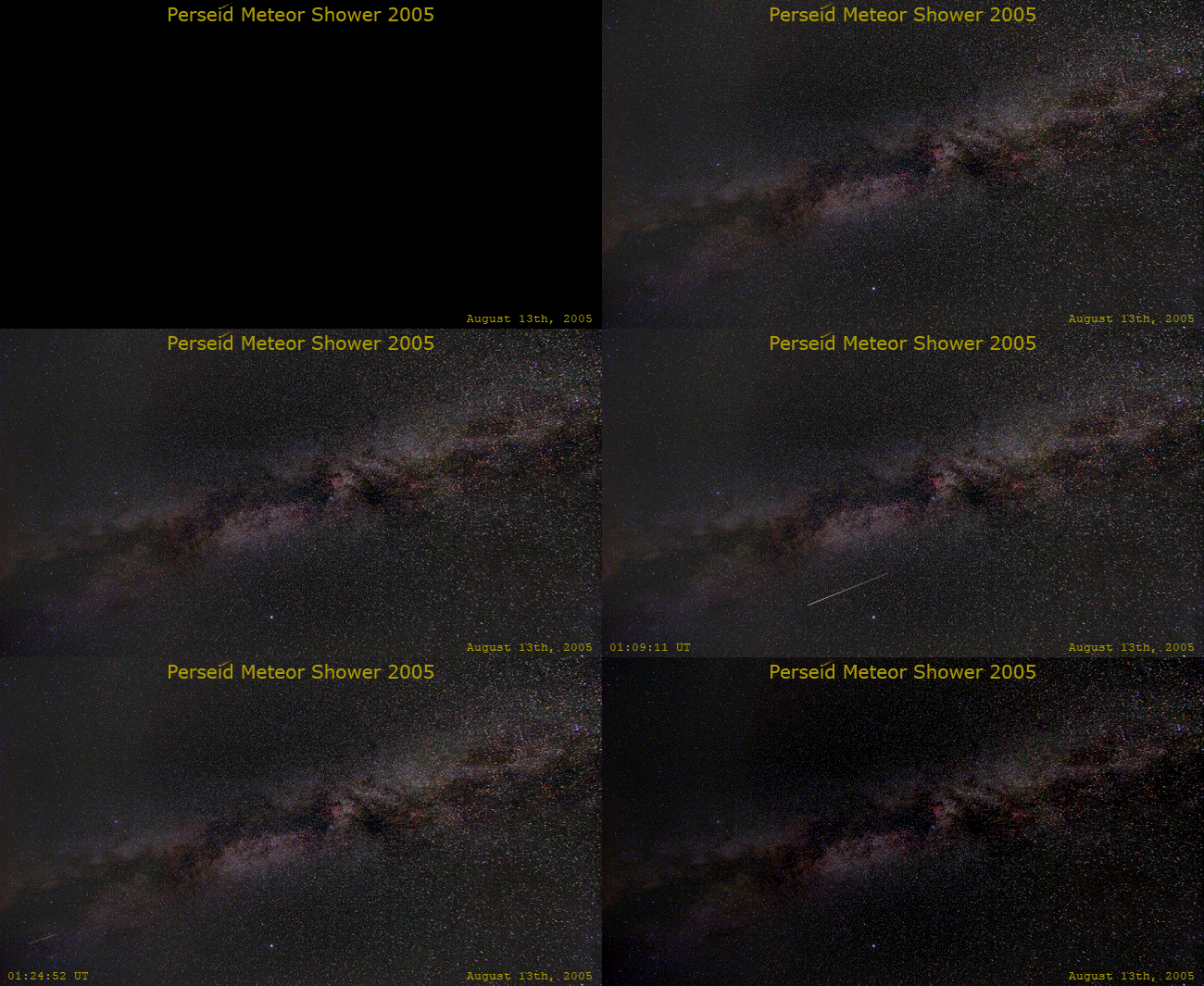
Where will the next Perseid meteor appear? Sky enthusiasts who trekked outside for the Perseid meteor shower that peaked over the past few days typically had this question on their mind. The above movie, where the time-line has been digitally altered, captures part of that very mystery. Eight meteors from the night of August 12 and the morning of August 13 have been identified in the movie so far, seven of which are Perseids. Can you identify the non-Perseid meteor? Since all Perseid meteors appear to come from the constellation of Perseus, the non-Perseid meteor is the one that streaks in a different direction. Early reports are that this year's Perseids were unfortunately a bit disappointing. The above digital mosaic was taken from Alsace, France, with the photogenic band of our Milky Way Galaxy far in the background.