Perseid Meteor Shower
The Perseid Meteor Shower is a prolific annual meteor shower caused when Earth passes through the debris stream left by Comet 109P/Swift‑Tuttle. Active from mid‑July to late August, it peaks around August 12–13, producing up to ~50–100 meteors per hour under dark skies—many bright and fast enough to leave colorful wakes.
Source: science.nasa.gov
APODs including "Perseid Meteor Shower"
Perseid in the Light
11/08/2006
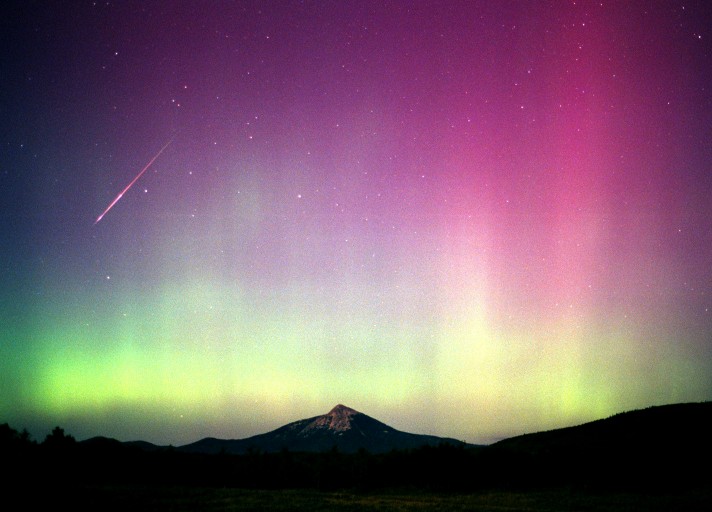
Dark skies are favored for viewing meteor showers -- so many are pessimistic about this year's Perseids. While the Perseid meteor shower is scheduled to peak this weekend, bright light from an almost full Moon will also flood the night and mask the majority of relatively faint meteors. Still, skygazing in the evening before the Moon rises (before about 10 PM local time) could reveal spectacular earthgrazing meteors. Persisting even later into the moonlit night can reward northern hemisphere watchers looking for occasional Perseid fireballs. In fact, astronomer Jimmy Westlake imaged this bright Perseid meteor despite the combination of moonlight and auroral glow over Colorado skies in August of 2000.