Perseid Meteor Shower
The Perseid Meteor Shower is a prolific annual meteor shower caused when Earth passes through the debris stream left by Comet 109P/Swift‑Tuttle. Active from mid‑July to late August, it peaks around August 12–13, producing up to ~50–100 meteors per hour under dark skies—many bright and fast enough to leave colorful wakes.
Source: science.nasa.gov
APODs including "Perseid Meteor Shower"
Ceci n'est pas un Meteore
19/08/2006
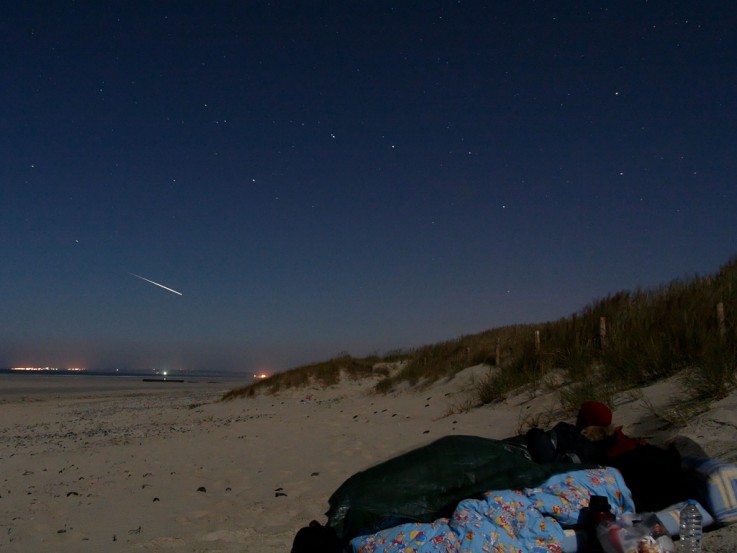
To paraphrase Magritte, "This is not a meteor". It's not a picture of a meteor either, but it was taken during last weekend's peak of the Perseid Meteor shower. Skywatching with friends at a cosy beach campsite bathed in moonlight at Treguennec, France, astronomer and APOD translator Laurent Laveder planned to record bright Perseid meteors with camera and tripod. While the Perseid meteors he saw were neither numerous nor bright he did capture the brilliant trail of an Iridium communication satellite. His long exposure began after the satellite glint became visible, so the resulting streak does resemble a meteor trail in the final image. Also recognizable in the serene view of sandy beach and starry sky is the famous northern asterism, the Big Dipper.