Perseid Meteor Shower
The Perseid Meteor Shower is a prolific annual meteor shower caused when Earth passes through the debris stream left by Comet 109P/Swift‑Tuttle. Active from mid‑July to late August, it peaks around August 12–13, producing up to ~50–100 meteors per hour under dark skies—many bright and fast enough to leave colorful wakes.
Source: science.nasa.gov
APODs including "Perseid Meteor Shower"
Perseid over Albrechtsberg Castle
09/08/2013
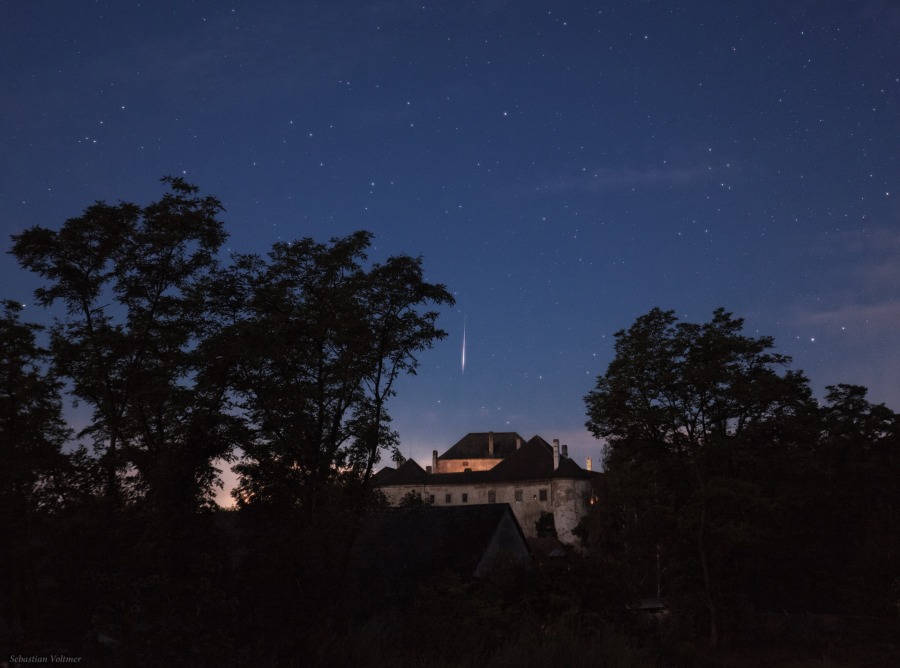
Medieval Albrechtsberg castle is nestled in trees near the northern bank of the river Pielach and the town of Melk, Austria. In clearing night skies on August 12, 2012 it stood under constellations of the northern summer, including Aquarius, Aquila, and faint, compact Delphinus (above and right of center) in this west-looking skyview. The scene also captures a bright meteor above the castle walls. Part of the annual perseid meteor shower, its trail points back toward the heroic constellation Perseus high above the horizon in the early morning hours. Entering the atmosphere at about 60 kilometers per second, perseid meteors are swept up dust grains from the tail of comet Swift-Tuttle. Of course, this year's perseid meteors will flash through night skies this weekend.