Perseid Meteor Shower
The Perseid Meteor Shower is a prolific annual meteor shower caused when Earth passes through the debris stream left by Comet 109P/Swift‑Tuttle. Active from mid‑July to late August, it peaks around August 12–13, producing up to ~50–100 meteors per hour under dark skies—many bright and fast enough to leave colorful wakes.
Source: science.nasa.gov
APODs including "Perseid Meteor Shower"
Perseids over Meteora
10/08/2013
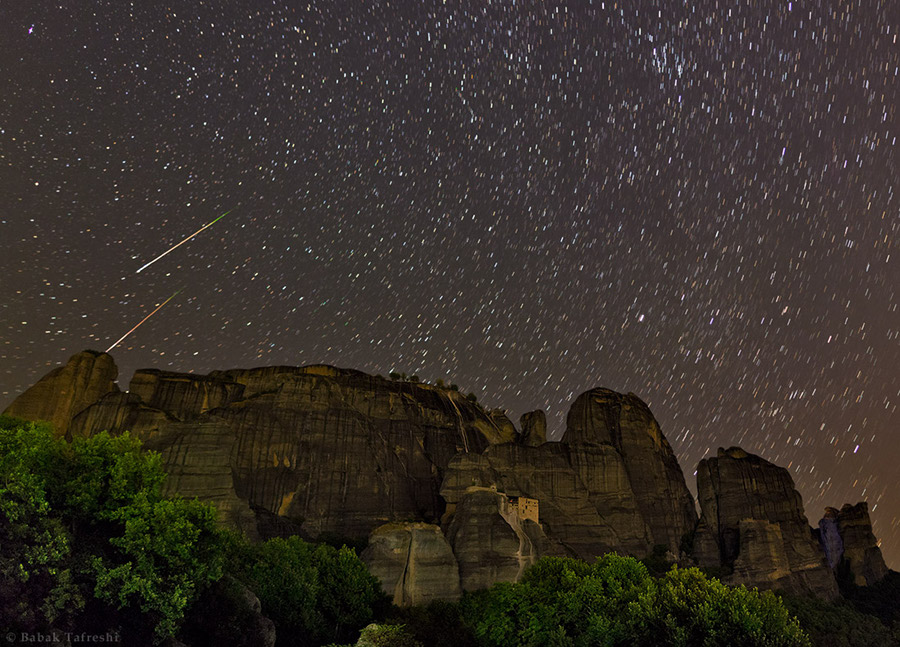
The two bright meteors flashing through this night skyscape from August 7 are part of the ongoing Perseid meteor shower. In the direction indicated by both colorful streaks, the shower's radiant in the eponymous constellation Perseus is at the upper right. North star Polaris, near the center of all the short, arcing star trails is at the upper left. But also named for its pose against the sky, the monastery built on the daunting sandstone cliffs in the foreground is part of Meteora. A World Heritage site, Meteora is a historic complex of lofty monasteries located near Kalabaka in central Greece.