Perseid Meteor Shower
The Perseid Meteor Shower is a prolific annual meteor shower caused when Earth passes through the debris stream left by Comet 109P/Swift‑Tuttle. Active from mid‑July to late August, it peaks around August 12–13, producing up to ~50–100 meteors per hour under dark skies—many bright and fast enough to leave colorful wakes.
Source: science.nasa.gov
APODs including "Perseid Meteor Shower"
Perseid by the Sea
16/08/2017
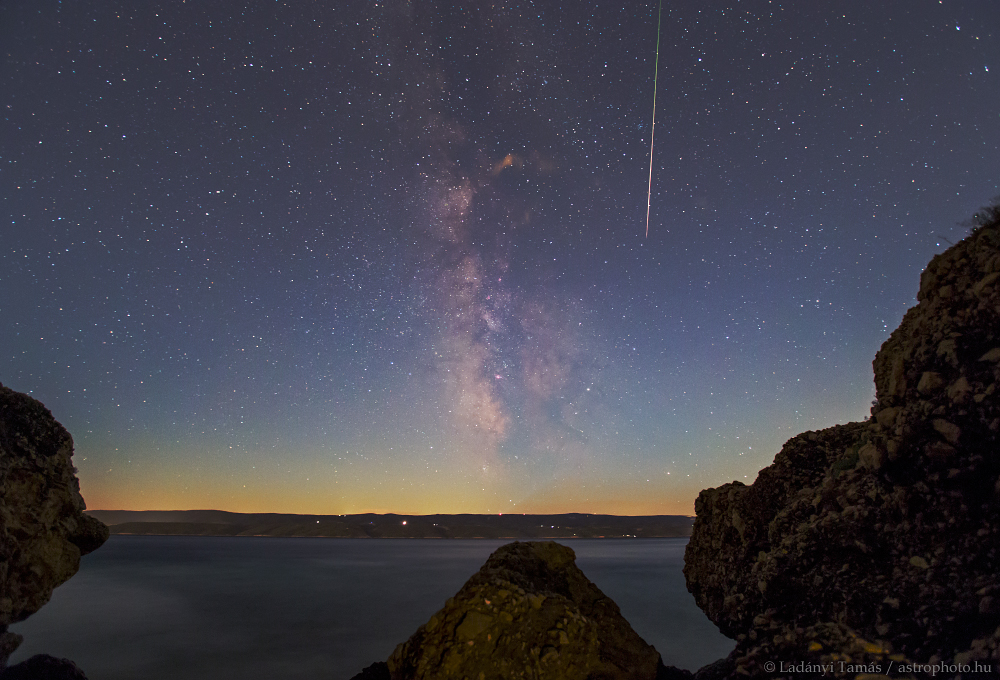
Just after moonrise on August 12 this grain of cosmic sand fell by the sea, its momentary flash part of the annual Perseid Meteor Shower. To create the Perseid meteors, dust along the orbit of periodic comet Swift-Tuttle is swept up by planet Earth. The cometary debris plows through the atmosphere at nearly 60 kilometers per second and is quickly vaporized at altitudes of 100 kilometers or so. Perseid meteors are often bright and colorful, like the one captured in this sea and night skyscape. Against starry sky and faint Milky Way the serene view looks south and west across the Adriatic Sea, from the moonlit Dalmatian coast toward the island of Brac.