Perseid Meteor Shower
The Perseid Meteor Shower is a prolific annual meteor shower caused when Earth passes through the debris stream left by Comet 109P/Swift‑Tuttle. Active from mid‑July to late August, it peaks around August 12–13, producing up to ~50–100 meteors per hour under dark skies—many bright and fast enough to leave colorful wakes.
Source: science.nasa.gov
APODs including "Perseid Meteor Shower"
Meteors along the Milky Way
24/08/2023
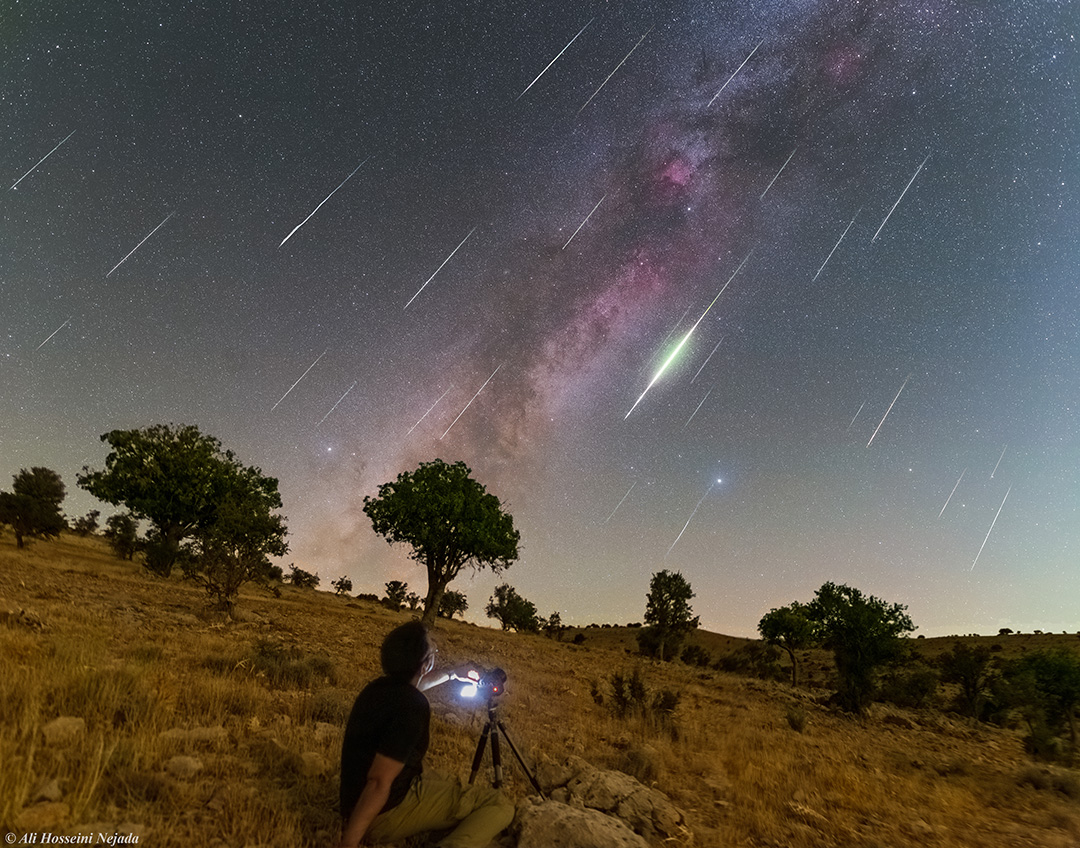
Under dark and mostly moonless night skies, many denizens of planet Earth were able to watch this year's Perseid meteor shower. Seen from a grassy hillside from Shiraz, Iran these Perseid meteors streak along the northern summer Milky Way before dawn on Sunday, August 13. Frames used to construct the composited image were captured near the active annual meteor shower's peak between 02:00 AM and 04:30 AM local time. Not in this night skyscape, the shower's radiant in the heroic constellation Perseus is far above the camera's field of view. But fans of northern summer nights can still spot a familiar asterism. Formed by bright stars Deneb, Vega, and Altair, the Summer Triangle spans the luminous band of the Milky Way.