Perseid Meteor Shower
The Perseid Meteor Shower is a prolific annual meteor shower caused when Earth passes through the debris stream left by Comet 109P/Swift‑Tuttle. Active from mid‑July to late August, it peaks around August 12–13, producing up to ~50–100 meteors per hour under dark skies—many bright and fast enough to leave colorful wakes.
Source: science.nasa.gov
APODs including "Perseid Meteor Shower"
Periodic Comet Swift-Tuttle
08/08/2024
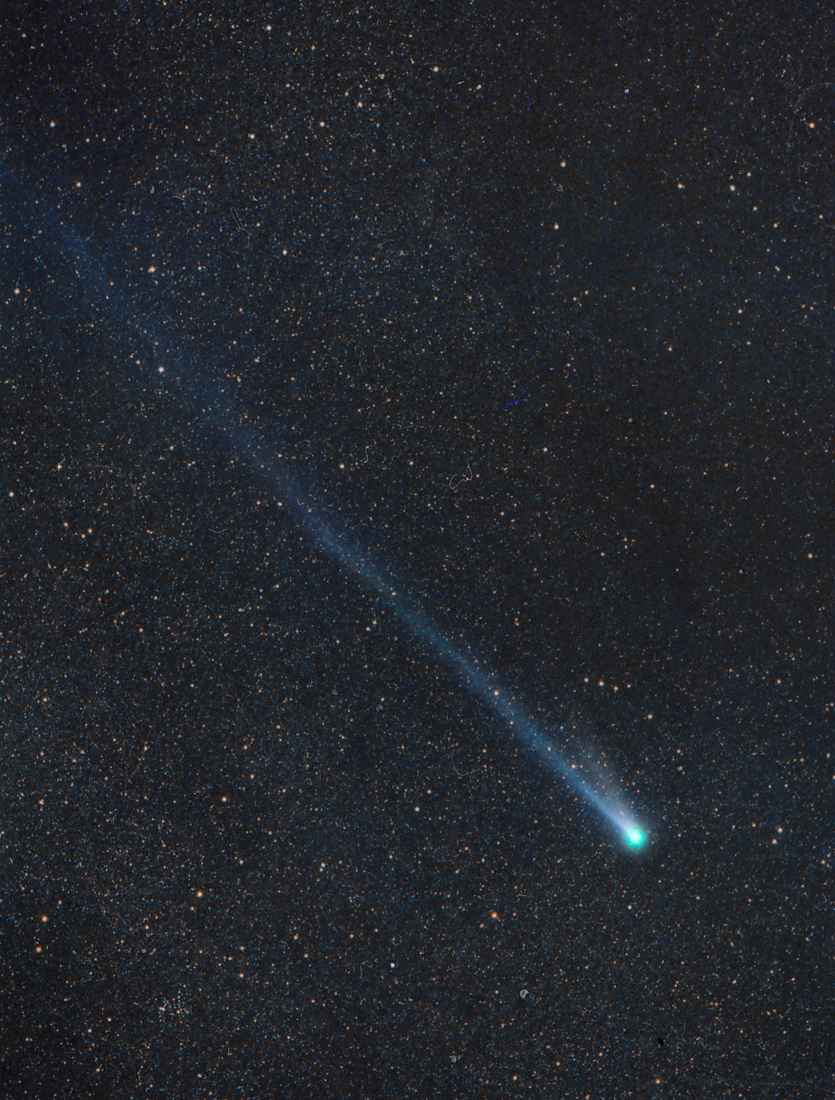
A Halley-type comet with an orbital period of about 133 years, Comet 109P/Swift-Tuttle is recognized as the parent of the annual Perseid Meteor Shower. The comet's last visit to the inner Solar System was in 1992. Then, it did not become easily visible to the naked eye, but it did become bright enough to see from most locations with binoculars and small telescopes. This stunning color image of Swift-Tuttle's greenish coma, long ion tail and dust tail was recorded using film on November 24, 1992. That was about 16 days after the large periodic comet's closest approach to Earth. Comet Swift-Tuttle is expected to next make an impressive appearance in night skies in 2126. Meanwhile, dusty cometary debris left along the orbit of Swift-Tuttle will continue to be swept up creating planet Earth's best-known July and August meteor shower.