Perseid Meteor Shower
The Perseid Meteor Shower is a prolific annual meteor shower caused when Earth passes through the debris stream left by Comet 109P/Swift‑Tuttle. Active from mid‑July to late August, it peaks around August 12–13, producing up to ~50–100 meteors per hour under dark skies—many bright and fast enough to leave colorful wakes.
Source: science.nasa.gov
APODs including "Perseid Meteor Shower"
Spokes on Saturn's B Ring
05/08/2026
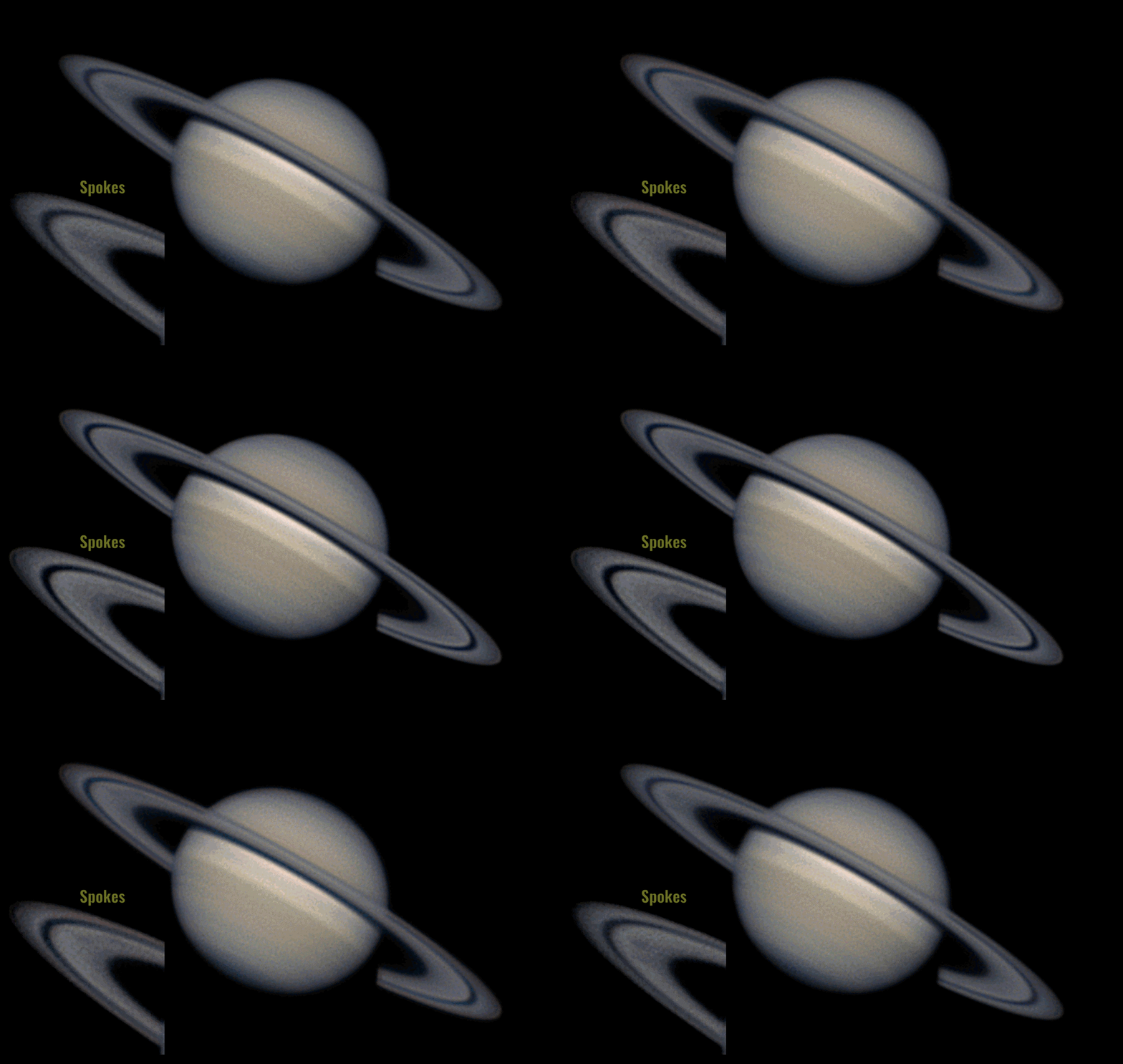
Don’t get spooked by Saturn’s ghostly spokes! Today we feature a nearly two-hour timelapse of Saturn and its rings looping forwards and backwards. If you look closely, a ghoulish shadow appears and disappears as Saturn’s B ring rotates. Decades of observation with Voyager 2, Cassini, and Hubble show the appearance of Saturn’s spokes varies with the planet’s seasons. Like Earth, Saturn’s spin axis is tilted compared to the plane of its orbit around the Sun. During Saturn’s equinox, the rings are less tilted toward the Sun and they receive sunlight at a shallower angle. Saturn’s spokes may be electrically charged dust and ice temporarily levitated above the rings by electromagnetic forces. It is still uncertain, but the ring plasma and charge environment may be influenced by changing ultraviolet illumination, meteoroid impacts, or indirect effects from interactions between the solar wind and the planet’s magnetic field. Note: The text of this APOD has been revised. Find dark skies and look up this August to witness the Perseid meteor shower uninhibited by the Moon!