Planetary Nebula
An expanding shell of ionized gas ejected from a red giant star in the late stages of stellar evolution. Despite the name, it has no connection to planets. The glowing gas is illuminated by the hot core of the dying star.
Source: science.nasa.gov
APODs including "Planetary Nebula"
The Incredible Expanding Cat's Eye
16/09/1999
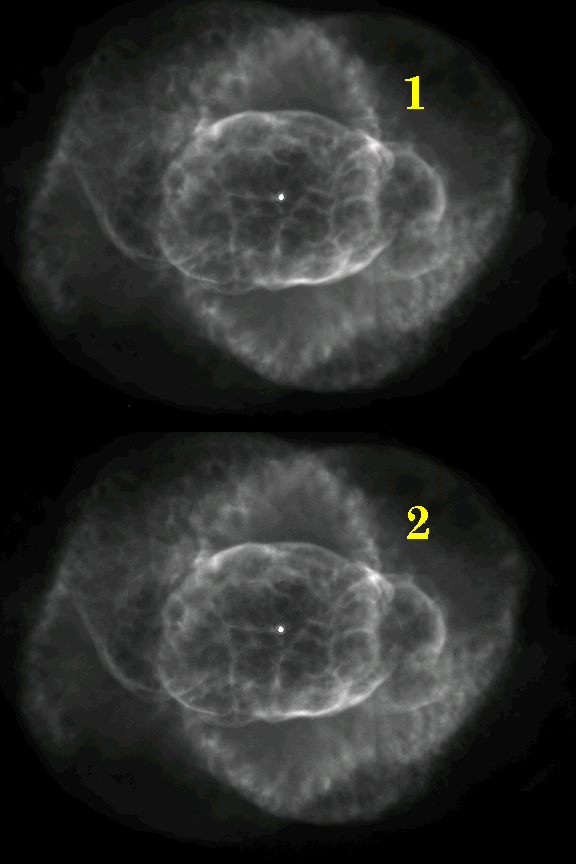
Watch closely. As this animation blinks between two Hubble Space Telescope images of NGC 6543 - the first from 1994 and the second from 1997 - the intricate filaments of this nebula are seen to shift. The shift is due to the actual expansion of this gaseous shroud shed by a dying star! NGC 6543 is more popularly known as the Cat's Eye Nebula. Classified as a "planetary nebula", its complex, interwoven shells of expanding gas have been castoff by the central star as it evolves from a red giant to its final white dwarf phase. The planetary nebula phase of a star's life is known to be relatively brief, lasting 10,000 years or so. In fact, combined with other data, this nebula's detectable shift over a three year period allows the expansion age of its bright inner shells to be estimated at only around 1,000 years while its distance can be gauged at about 3,000 light-years.