Rosette Nebula
The Rosette Nebula (NGC 2237–39, 2244) is a large H II region and stellar nursery about 5,200 light‑years away in the constellation Monoceros. Spanning roughly 100 light‑years, it consists of a central cavity surrounded by ionized gas illuminated and sculpted by the young star cluster NGC 2244, with pillars, cavities, and ongoing star formation.
Source: science.nasa.gov
APODs including "Rosette Nebula"
Star Cluster in the Rosette Nebula
22/05/1996
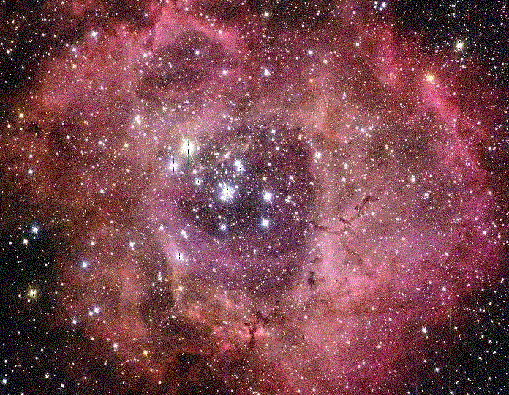
mbedded in the center of the colorful and photogenic Rosette Nebula is a bright, young open cluster. The bright blue stars in this cluster, labelled NGC 2244, emit ultraviolet light that knocks electrons away from hydrogen atoms. When the electrons fall back, they emit the red light which distinctively defines the glow of all emission nebulae. The Rosette Nebula is thousands of light years distant, but light would take only about 100 years to cross it. The Rosette Nebula is not difficult to observer and, although faint, actually appears larger than the full moon.