Rosette Nebula
The Rosette Nebula (NGC 2237–39, 2244) is a large H II region and stellar nursery about 5,200 light‑years away in the constellation Monoceros. Spanning roughly 100 light‑years, it consists of a central cavity surrounded by ionized gas illuminated and sculpted by the young star cluster NGC 2244, with pillars, cavities, and ongoing star formation.
Source: science.nasa.gov
APODs including "Rosette Nebula"
The Big Picture
11/04/2009
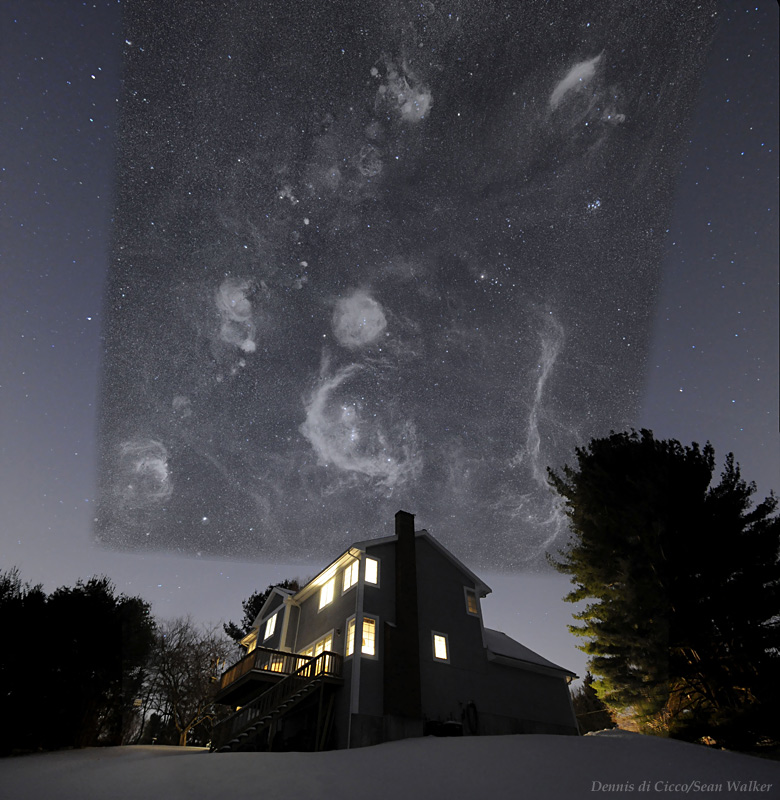
Intricate, glowing nebulae that shine in planet Earth's night sky are beautiful to look at in deep images made with telescopes and sensitive cameras. But they are faint and otherwise invisible to the naked-eye. That makes their relative location and extent on the sky difficult to appreciate. So, consider this impressive composite image of a wide region of the northern winter sky. With a total exposure time of 40 hours, the painstaking mosaic presents a nebula-rich expanse known as the Orion-Eridanus Superbubble above a house in suburban Boston, USA. Within the wide and deep view are nebulae more often seen in narrower views, including the Great Orion Nebula, the Rosette Nebula, the Seagull Nebula, the California Nebula, and Barnard's Loop. The familiar constellation of Orion itself is just above the foreground house. Brightest star Sirius is left of the roof, and the recognizable Pleiades star cluster is above the tree at the right. A version of the big picture that includes simple constellation guidelines is available here.