Sagittarius
Sagittarius is a constellation in the southern sky that lies in the direction of the center of the Milky Way galaxy. It is rich in deep-sky objects and is home to Sagittarius A*, the supermassive black hole at the Milky Way’s core.
Source: nasa.gov
APODs including "Sagittarius"
Hydrogen Trifid
28/08/1998
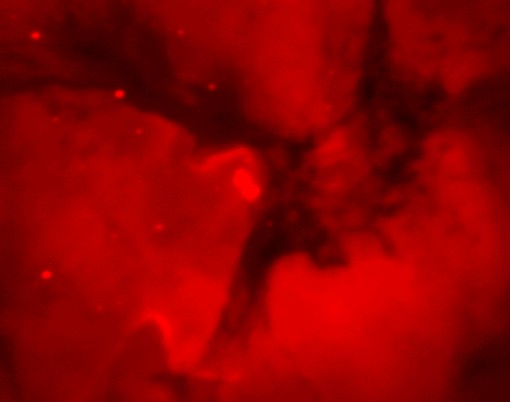
Clouds of glowing hydrogen gas mingle with dark dust lanes in the Trifid Nebula, a star forming region in the constellation Sagittarius. In this and other similar emission nebulae, energetic ultraviolet light from an embedded hot young star strips electrons from the surrounding hydrogen atoms. As the electrons and atoms recombine they emit longer wavelength, lower energy light in a well known characteristic pattern of bright spectral lines. At visible wavelengths, the strongest emission line in this pattern is in the red part of the spectrum and is known as "Hydrogen-alpha" or just H-alpha. This image of the nebula was taken using a filter to select only light near the H-alpha wavelength. It shows those regions with substantial emission from atomic hydrogen. The relative strength of this emission can trace the densities of atoms within the gas cloud.