Solargraph
A solargraph is a long-exposure photograph that captures the Sun's path across the sky over extended periods, often weeks or months. Utilizing a simple pinhole camera, such as one made from an aluminum can lined with photographic paper, solargraphs record continuous solar trails, revealing the Sun's movement and seasonal changes.
Source: apod.nasa.gov
APODs including "Solargraph"
Solstice to Solstice Solargraph
26/06/2009
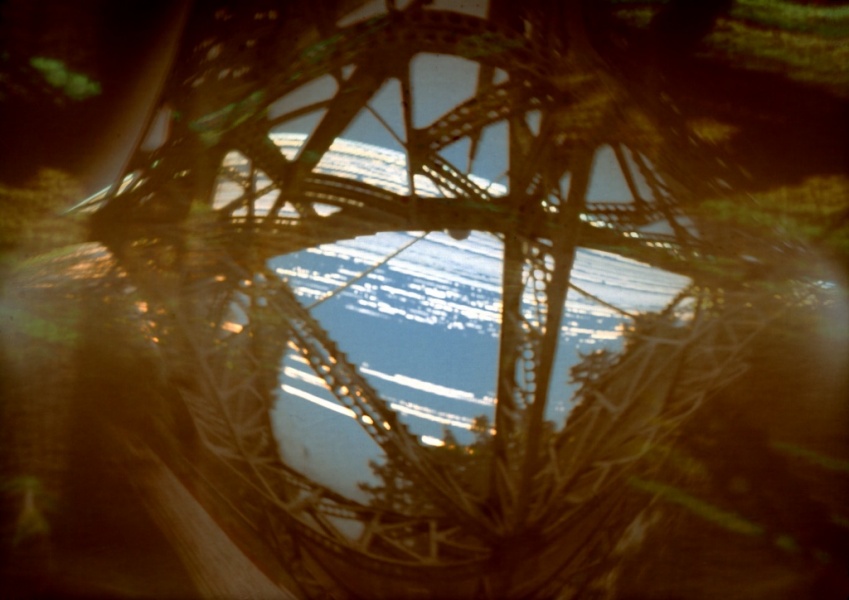
This six month long exposure compresses the time from solstice to solstice (~ December 21, 2008 to June 20, 2009) into a single point of view. Dubbed a solargraph, the unconventional picture was recorded with a pinhole camera made from an aluminum can lined with a piece of photographic paper. Fixed to a single spot for the entire exposure, the simple camera continuously records the Sun's daily path as a glowing trail burned into the photosensitive paper. Breaks and gaps in the trails are caused by cloud cover. In this case, the spot was chosen to look out from inside a radio telescope at the Ondrejov Observatory in the Czech Republic. At the end of the exposure, the paper was removed from the can and immediately scanned digitally. Contrasts and colors were then enhanced and added to the digital image. Of course, in December, the Sun trails begin lower down at the northern hemisphere's winter solstice. The trails climb higher in the sky as the June 21st summer solstice approaches.