The Moon
The Moon is Earth’s only natural satellite—a rocky, cratered body about one‑quarter the diameter of Earth, orbiting at an average distance of approximately 384,400 km. It influences tides, stabilizes Earth’s axial tilt, and was formed about 4.5 billion years ago following a collision between Earth and a Mars-sized object.
Source: science.nasa.gov
APODs including "The Moon"
Earth's Moon, A Familiar Face
03/09/1995
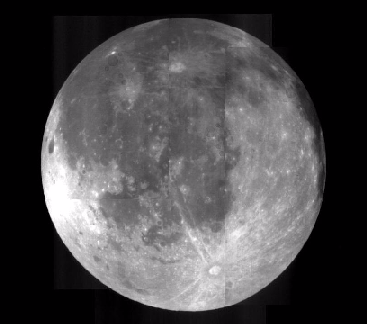
The above mosaic of the Earth's Moon was compiled from photos taken by the spacecraft Clementine in 1994. This image represents the side of the Moon familiar to Earth dwellers. The Moon revolves around the Earth about once every 28 days. Since its rate of rotation about its axis is also once in 28 days, it always keeps the same face toward the Earth. As the Moon travels around its orbit, the Earth based view of the half of the Moon that faces the Sun changes causing the regular monthly progression of Lunar phases. Humans first crashed a spacecraft into the Moon in 1959, but the first humans to reach the Moon landed in 1969. There are now golf balls on the Moon.