The Moon
The Moon is Earth’s only natural satellite—a rocky, cratered body about one‑quarter the diameter of Earth, orbiting at an average distance of approximately 384,400 km. It influences tides, stabilizes Earth’s axial tilt, and was formed about 4.5 billion years ago following a collision between Earth and a Mars-sized object.
Source: science.nasa.gov
APODs including "The Moon"
A Total Solar Eclipse
24/10/1995
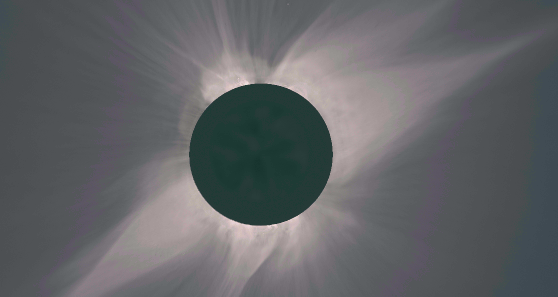
Pictured above is a total solar eclipse, with the Sun's corona, clearly visible surrounding the Moon. This picture is a composite of differently exposed photos of an eclipse that occurred on July 11, 1991. Today there will be another total eclipse of the Sun, the last until March 1997. The path of today's total eclipse will begin in the Middle East, move though southern China, and end in the Pacific Ocean south of the Marshall Islands. Those only near the path will see a partial solar eclipse. NASA keeps detailed maps of the predicted path of the eclipse.