The Moon
The Moon is Earth’s only natural satellite—a rocky, cratered body about one‑quarter the diameter of Earth, orbiting at an average distance of approximately 384,400 km. It influences tides, stabilizes Earth’s axial tilt, and was formed about 4.5 billion years ago following a collision between Earth and a Mars-sized object.
Source: science.nasa.gov
APODs including "The Moon"
Apollo 14 on the Moon
09/12/1995
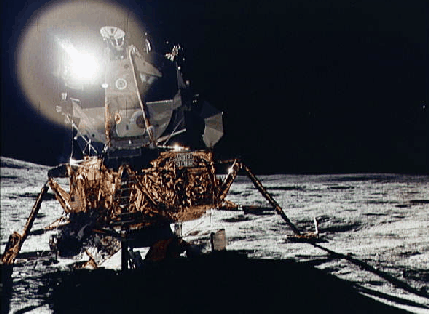
The jewel-like glare from a brilliant sun reflects off the lunar module of the Apollo 14 mission to the Moon as it rests on the lunar surface in February 1971. Astronauts Alan Shepard and Edgar Mitchell walked on the Moon's surface while astronaut Stuart Roosa piloted the orbiting command module. Coming only months after the abortive Apollo 13 mission, Apollo 14 was famous for long exploratory moon walks, collecting samples of lunar bedrock from Cone Crater, deploying the Apollo Lunar Surface Experiments Package, and hitting golf balls. The slope rising to the rim of Cone Crater is visible at the left edge of the photo.