The Moon
The Moon is Earth’s only natural satellite—a rocky, cratered body about one‑quarter the diameter of Earth, orbiting at an average distance of approximately 384,400 km. It influences tides, stabilizes Earth’s axial tilt, and was formed about 4.5 billion years ago following a collision between Earth and a Mars-sized object.
Source: science.nasa.gov
APODs including "The Moon"
Comet Hyakutake Finder Chart for April
31/03/1996
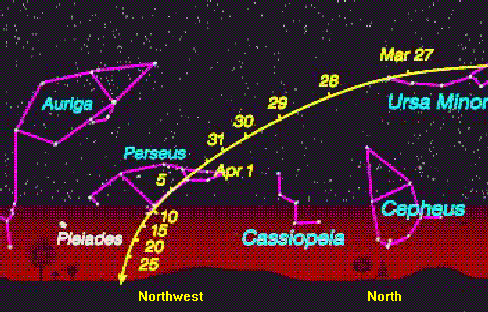
During April Comet Hyakutake heads in toward the Sun after passing the Earth. At this time the comet's orbit places it north of the Earth. Remaining visible in the northern sky as it nears the Sun, it will set progressively earlier in the evening. Early in April, the Moon's glow will diminish viewing of the comet's tail - except during the lunar eclipse on April 3rd! As the comet recedes from the Earth it will appear dimmer even though it is getting intrinsically brighter as it nears the Sun. In late April the intrinsic brightening effect will "win" and the comet will again appear to brighten - possibly getting even brighter than it was last week. At this point the comet will appear near sunset low on the northwestern horizon (see above). So far Comet Hyakutake has exceeded most expectations in brightness and length of tail. If you haven't been impressed by Hyakutake, you probably haven't seen it from a dark location! Latest Comet Hyakutake images: JPL, Fayetteville Observer-Times, NASA's Night of the Comet, ICSTARS, Crni Vrh Obs., Cent. Mich U.