The Moon
The Moon is Earth’s only natural satellite—a rocky, cratered body about one‑quarter the diameter of Earth, orbiting at an average distance of approximately 384,400 km. It influences tides, stabilizes Earth’s axial tilt, and was formed about 4.5 billion years ago following a collision between Earth and a Mars-sized object.
Source: science.nasa.gov
APODs including "The Moon"
A Lucky Lunar Eclipse
03/04/1996
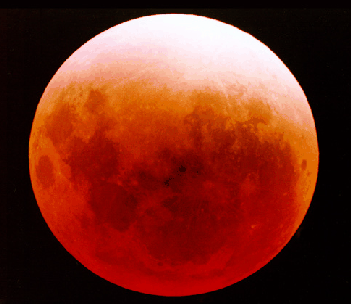
Tonight's full moon would normally washout the spectacle of Comet Hyakutake's lovely tail, even for those far from light polluted skies. Except that tonight comet observers are in luck - the dance of the planets calls for a total lunar eclipse! Lunar eclipses are caused when the Moon passes through the Earth's shadow. Although dimmed, the eclipsed Moon may not appear completely dark. Sunlight scattered into the Earth's shadow after passing around the planet's edge and through its dusty atmosphere can make the Moon take on dramatic shades of red during totality as demonstrated in the above photo of the November 1993 lunar eclipse. Tonight, totality begins at 6:26 p.m. EST and lasts about an hour and a half. Weather permitting, the eclipse will be visible for all those comet and moon watchers lucky enough to be on the Earth's nightside. Latest Comet Hyakutake images: APOD Hyakutake Archive, JPL, Fayetteville Observer-Times, NASA's Night of the Comet, ICSTARS, Jerry Lodriguss, ScienceWeb, Crni Vrh Obs., Cent. Mich. U.