The Moon
The Moon is Earth’s only natural satellite—a rocky, cratered body about one‑quarter the diameter of Earth, orbiting at an average distance of approximately 384,400 km. It influences tides, stabilizes Earth’s axial tilt, and was formed about 4.5 billion years ago following a collision between Earth and a Mars-sized object.
Source: science.nasa.gov
APODs including "The Moon"
The Eagle Soars
21/07/1996
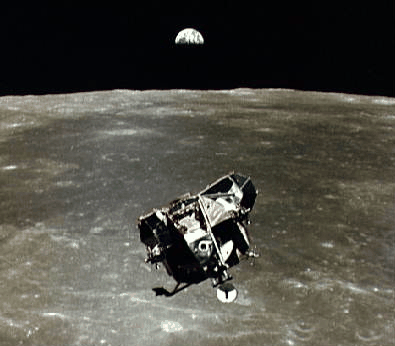
On July 21, 1969 Apollo 11 astronauts Neil A. Armstrong and Edwin E. "Buzz" Aldrin Jr. lifted off the lunar surface in the ascent stage of their lunar module dubbed "The Eagle" -- after becoming the first to walk on the moon. Seen here the Eagle soars towards a rendezvous with the orbiting Command Module piloted by Michael Collins. The smooth, dark mare area on the surface below is Mare Smithii located just below the equator on the extreme eastern edge of the lunar nearside. The Earth is visible hanging above the moon's western horizon.