The Moon
The Moon is Earth’s only natural satellite—a rocky, cratered body about one‑quarter the diameter of Earth, orbiting at an average distance of approximately 384,400 km. It influences tides, stabilizes Earth’s axial tilt, and was formed about 4.5 billion years ago following a collision between Earth and a Mars-sized object.
Source: science.nasa.gov
APODs including "The Moon"
Apollo 15's Home on the Moon
10/05/1997
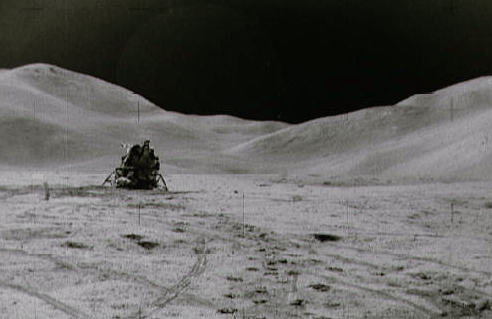
Could you ever call this place home? The lunar module shown above, named "Falcon," served as home for Apollo 15 astronauts David Scott and James Irwin during their stay on the Moon in July and August 1971. Meanwhile, astronaut Alfred Worden circled in the command module overhead. Harsh sunlight on the grey lunar surface lends the image an eerie quality, while the Lunar Apennine Mountains frame the background with Mount Hadley Delta visible on the right. Visible in the foreground are tracks from the first Lunar Roving Vehicle, an electric car which enabled the astronauts to explore extended areas on the lunar surface. Apollo 15 confirmed that most lunar surface features were created by impacts. Rocks returned by the Apollo 15 crew included green glasses whose formation mechanism is still unclear.