The Moon
The Moon is Earth’s only natural satellite—a rocky, cratered body about one‑quarter the diameter of Earth, orbiting at an average distance of approximately 384,400 km. It influences tides, stabilizes Earth’s axial tilt, and was formed about 4.5 billion years ago following a collision between Earth and a Mars-sized object.
Source: science.nasa.gov
APODs including "The Moon"
Moon Occults Saturn
24/09/1997
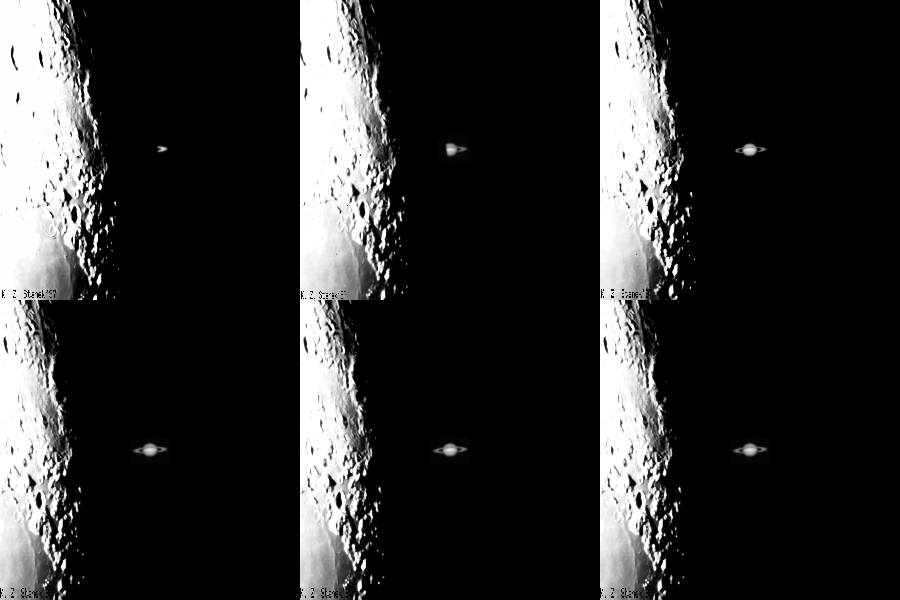
Many stargazers in the U. S. were able to watch a lovely lunar occultation early last Thursday morning as a bright Moon passed in front of Saturn. Using a 1.2 meter reflector, astronomer Kris Stanek had an excellent view of this dream-like event from the Whipple Observatory atop Arizona's Mount Hopkins. This animated gif image was constructed by Wes Colley from 4 frames taken by Stanek at 35 second intervals as the ringed planet emerged from behind the Moon's dark limb. While lunar occultations of fairly bright stars and planets are not extremely rare events, their exact timing depends critically on the observer's location.