The Moon
The Moon is Earth’s only natural satellite—a rocky, cratered body about one‑quarter the diameter of Earth, orbiting at an average distance of approximately 384,400 km. It influences tides, stabilizes Earth’s axial tilt, and was formed about 4.5 billion years ago following a collision between Earth and a Mars-sized object.
Source: science.nasa.gov
APODs including "The Moon"
XMM Launched
21/12/1999
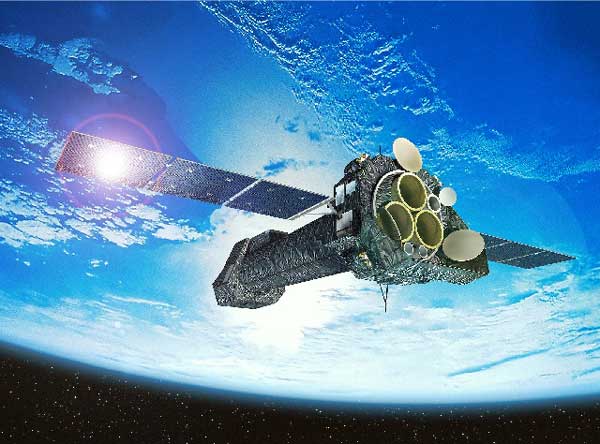
X-ray astronomy entered a golden age earlier this month with the successful launch of the X-ray Multi-Mirror (XMM) satellite. XMM's three huge telescope barrels each hold 58 concentric cylindrical mirrors, together totaling a surface area rivaling a tennis court. Each mirror has been gold plated to less than one-millimeter thickness to reflect normally penetrating X-rays. ESA's XMM joins NASA's Chandra X-ray Observatory as leading observatories in X-ray astronomy. The XMM satellite also carries a small optical and ultraviolet telescope. XMM's unusually elliptical orbit around the Earth peaks nearly one-third of the way to the Moon. XMM's observing program during its planned two-year mission includes monitoring the hot surroundings of black holes, the fiery regions surrounding the centers of galaxies, the mysterious X-ray background light that appears to come from all directions, and the hot gas that glows between galaxies and stars.