The Moon
The Moon is Earth’s only natural satellite—a rocky, cratered body about one‑quarter the diameter of Earth, orbiting at an average distance of approximately 384,400 km. It influences tides, stabilizes Earth’s axial tilt, and was formed about 4.5 billion years ago following a collision between Earth and a Mars-sized object.
Source: science.nasa.gov
APODs including "The Moon"
Asteroid 1998 WT24 Passes Near Earth
24/12/2001
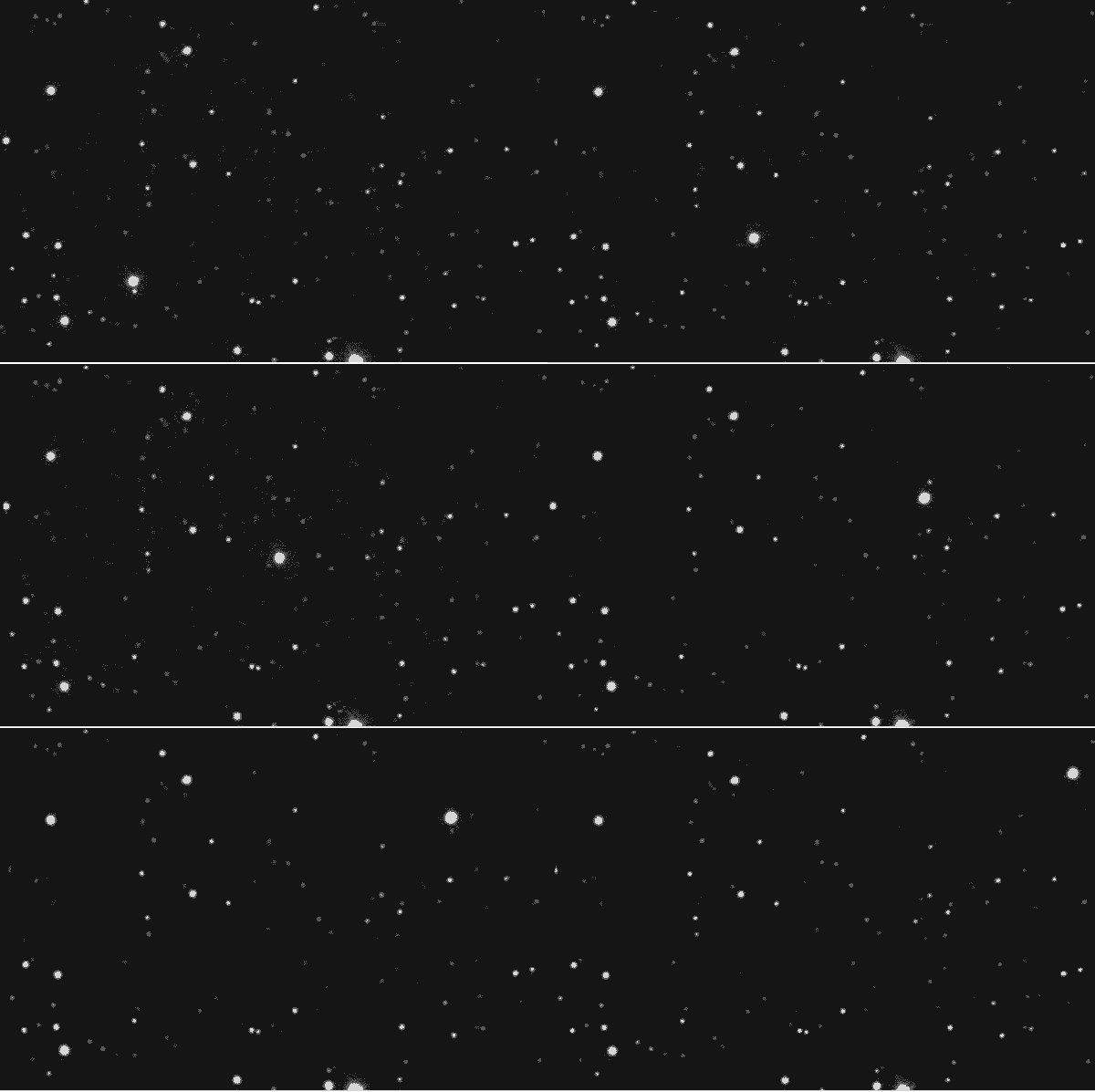
Last week, an asteroid approached unusually close to the Earth. Passing well outside the orbit of our Moon, Asteroid 1998 WT24 posed no danger, but became bright enough to see with binoculars and to track with radar. Pictured above, the kilometer-sized asteroid was imaged crossing the sky on December 14, two days before closest approach. Every few years, an asteroid will actually pass inside the orbit of the Moon. Large impact features on the Earth are testaments to asteroids or comets that actually impacted the Earth in the distant past. Astronomers continue to discover, track, and study potentially hazardous asteroids with a goal of making planet Earth a safer place.