The Moon
The Moon is Earth’s only natural satellite—a rocky, cratered body about one‑quarter the diameter of Earth, orbiting at an average distance of approximately 384,400 km. It influences tides, stabilizes Earth’s axial tilt, and was formed about 4.5 billion years ago following a collision between Earth and a Mars-sized object.
Source: science.nasa.gov
APODs including "The Moon"
November's Lunar Eclipse
07/11/2003
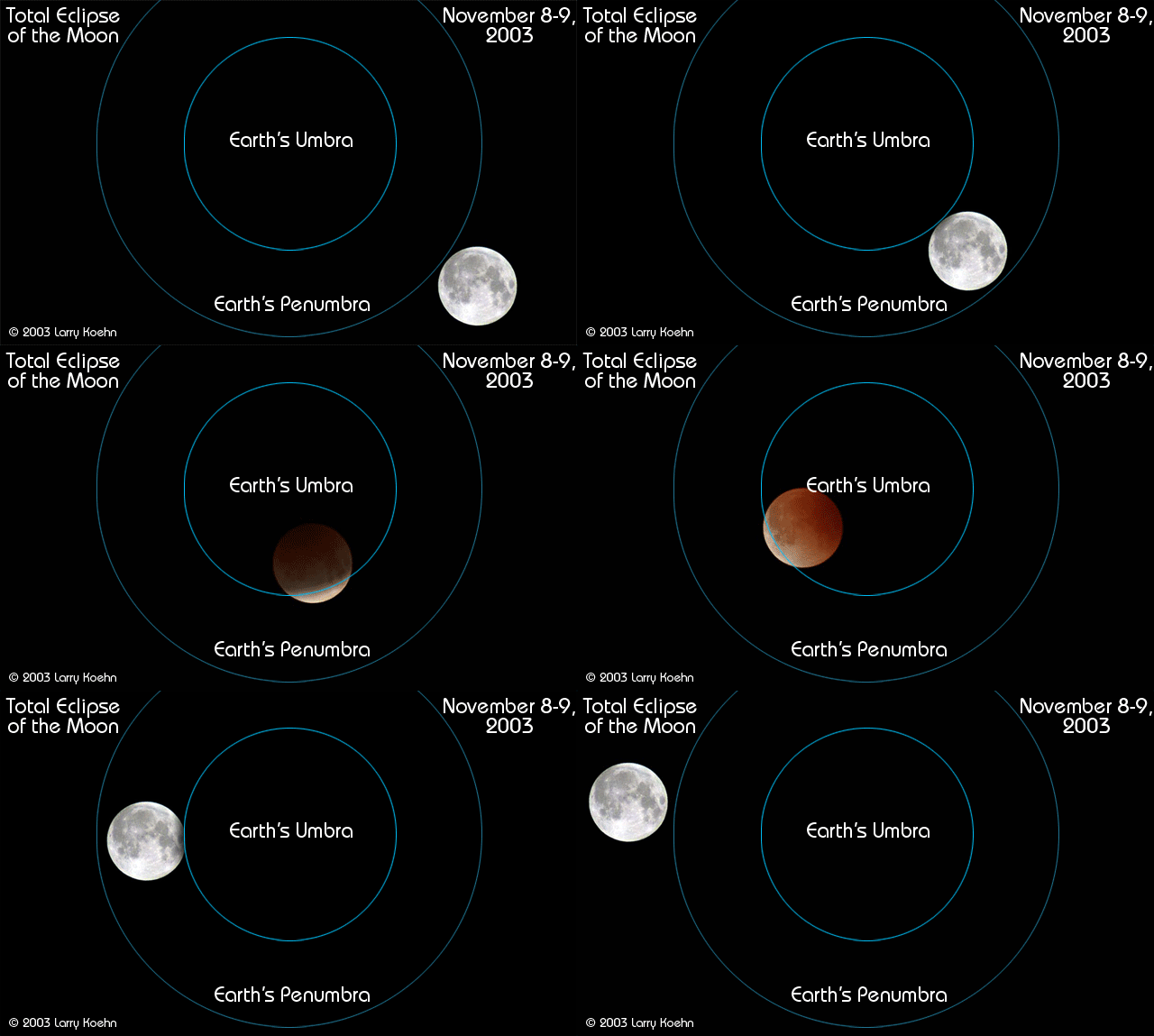
The Moon slides through the Earth's shadow this Saturday night / Sunday morning (November 8/9) giving skygazers in the Americas, Europe, Africa, and western Asia a chance to enjoy a total lunar eclipse. As lunar eclipses go, this will be a brief one though, with the total phase lasting only about 25 minutes. The orientation and relative size of the Earth's shadow and the Moon's trajectory are illustrated in this thoughtful animation showing the full Moon moving up from the lower right, entering the penumbra or outer portion of the shadow region, and then passing well below the center of the darker inner shadow region or umbra. The total eclipse phase begins at 1:06 Universal Time, November 9 (8:06pm EST Nov. 8) when the Moon is completely within the umbra. While the off-center passage guarantees a short total phase, it also makes it likely that this November's eclipsed Moon will be dramatically visible and colorful with a brighter rim along the southern edge.