The Moon
The Moon is Earth’s only natural satellite—a rocky, cratered body about one‑quarter the diameter of Earth, orbiting at an average distance of approximately 384,400 km. It influences tides, stabilizes Earth’s axial tilt, and was formed about 4.5 billion years ago following a collision between Earth and a Mars-sized object.
Source: science.nasa.gov
APODs including "The Moon"
Full Moondark
12/12/2003
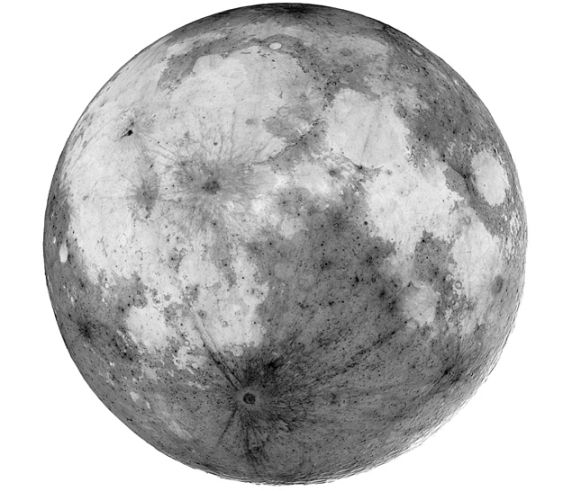
The brilliant full Moon might not have looked quite like this to skygazers this week, but the image is a mosaic of 18 digital frames recorded on December 9th at 3:30 UT. At that time, the Moon was only about seven hours past its exact full phase or time of maximum illumination as viewed from Earth. Here, the pixel values corresponding to light and dark areas have been translated in reverse, or inverted, producing a false-color representation reminiscent of a black and white photographic negative. Normally bright rays from the large crater Tycho dominate the southern (bottom) features as easily followed dark lines emanating from the 85 kilometer diameter impact site. Normally dark lunar mare appear light and silvery. Traditionally, astronomical images recorded on photographic plates were directly examined in this negative color scheme, which can help the eye pick out faint details.