The Moon
The Moon is Earth’s only natural satellite—a rocky, cratered body about one‑quarter the diameter of Earth, orbiting at an average distance of approximately 384,400 km. It influences tides, stabilizes Earth’s axial tilt, and was formed about 4.5 billion years ago following a collision between Earth and a Mars-sized object.
Source: science.nasa.gov
APODs including "The Moon"
Total Lunar Eclipse Tonight
27/10/2004
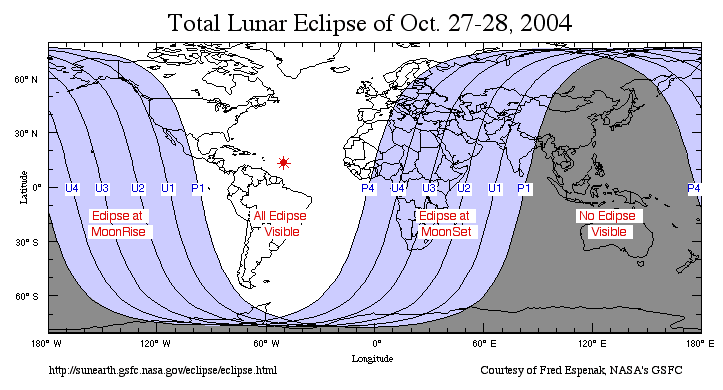
Go outside tonight and see the total lunar eclipse. Tonight's eclipse is easy and convenient for much of the world to see. Anyone who can spot a full Moon can see it fade out as the Earth's shadow engulfs it. No protective glasses or expensive telescopes are needed, just a little moxie. The above illustration shows how the eclipse will appear across the Earth. The total lunar eclipse starts at 9:14 pm Eastern Daylight Time, equivalent to 1:14 am UT in the morning for sky enthusiasts in the United Kingdom. From the moment the first part of the Moon disappears to the moment that the last part of the Moon reappears will be 3 hours and 40 minutes. For those unfortunate enough to suffer clouds, the eclipse can also be followed over several live webcasts. World Series Lunar Eclipse: Live TV shot makes this eclipse possibly the most seen live eclipse ever.