The Moon
The Moon is Earth’s only natural satellite—a rocky, cratered body about one‑quarter the diameter of Earth, orbiting at an average distance of approximately 384,400 km. It influences tides, stabilizes Earth’s axial tilt, and was formed about 4.5 billion years ago following a collision between Earth and a Mars-sized object.
Source: science.nasa.gov
APODs including "The Moon"
The Moving Moons of Saturn
27/06/2006
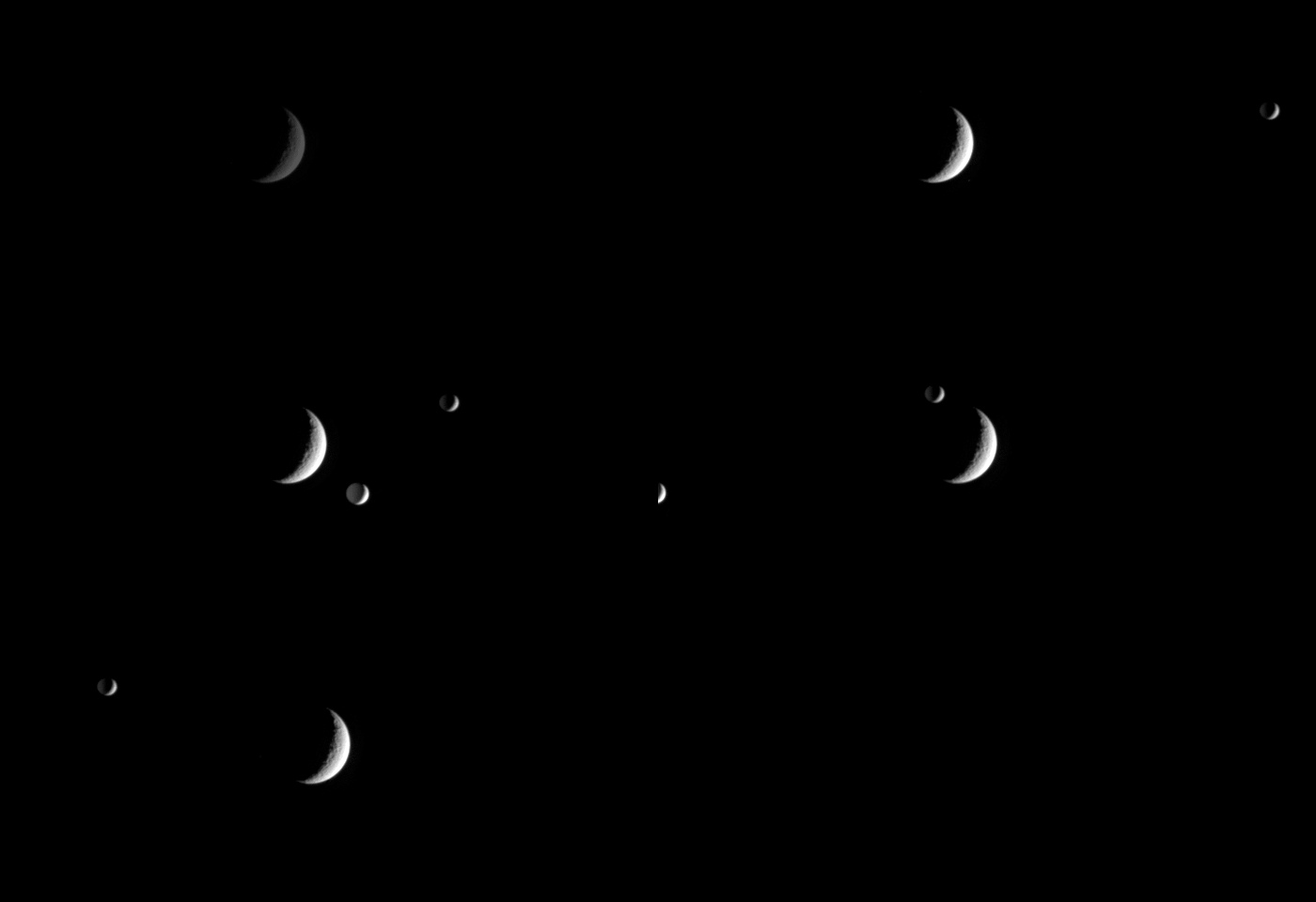
The moons of Saturn never stop. A space traveler orbiting the ringed giant planet would witness a continuing silent dance where Saturn's multiple moons pass near each other in numerous combinations. Like a miniature Solar System, the innermost moons orbit Saturn the fastest. The above movie was centered on Saturn's moon Rhea, so that the moons Mimas and Enceladus appear to glide by. At 1,500 kilometers across, Rhea is over three times larger than the comparably sized Mimas and Enceladus. The Sun illuminates the scene from the lower right, giving all of the moons the same crescent phase. The above time lapse movie was created by the Saturn-orbiting robotic Cassini spacecraft over a period of about 40 minutes.