The Moon
The Moon is Earth’s only natural satellite—a rocky, cratered body about one‑quarter the diameter of Earth, orbiting at an average distance of approximately 384,400 km. It influences tides, stabilizes Earth’s axial tilt, and was formed about 4.5 billion years ago following a collision between Earth and a Mars-sized object.
Source: science.nasa.gov
APODs including "The Moon"
Shadow Play
09/09/2006
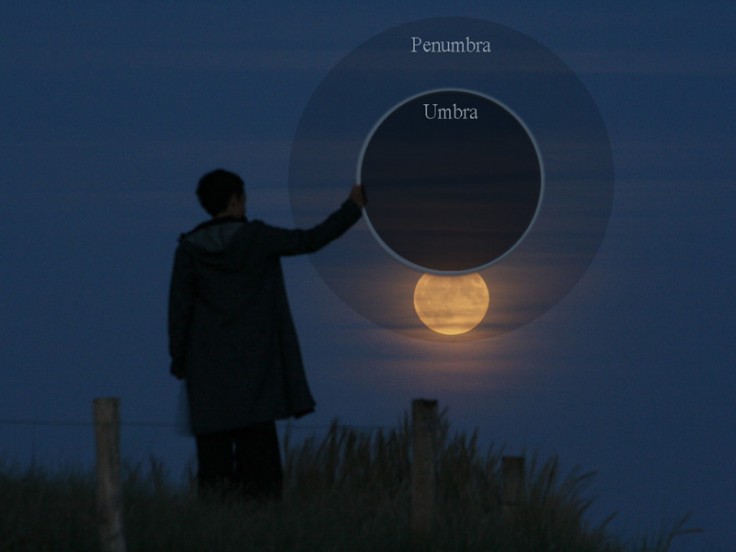
During September 7th's lunar eclipse, the Moon slid through the Earth's shadow. Extending into space, Earth's cone-shaped shadow has two distinct parts, the lighter, outer part or penumbra, and the darker, inner shadow called the umbra. For this eclipse, the lunar disk just grazed the shadow's dark inner umbra. As a result, only a small part of the Moon was noticeably eclipsed, but the performance still attracted the attention of Moon watchers along the Earth's night side. In this creative scene, eclipse enthusiasts have matched the curve of a hoop to the eclipsed portion of the Moon - demonstrating the apparent size and position of the lunar disk relative to the umbra and penumbra. Of course, it's only shadow play.