The Moon
The Moon is Earth’s only natural satellite—a rocky, cratered body about one‑quarter the diameter of Earth, orbiting at an average distance of approximately 384,400 km. It influences tides, stabilizes Earth’s axial tilt, and was formed about 4.5 billion years ago following a collision between Earth and a Mars-sized object.
Source: science.nasa.gov
APODs including "The Moon"
Pantheon Earth and Moon
20/04/2007
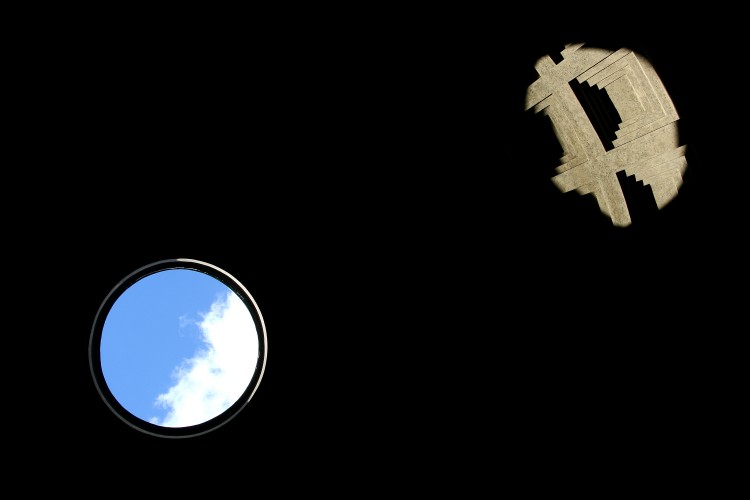
Could this be a picture of the Earth and Moon from space? It certainly looks like it at first glance, with a cratered Moon standing off from planet Earth's lovely blue disk surrounded by a nurturing atmosphere. In fact, this view looks up into the dome of the ancient Pantheon in Rome. The Earth's blue disk is really the daytime sky with clouds seen through a nine meter diameter central opening in the dome. The circular opening, or oculus, was intended as the source of light for the building's interior. The Moon is actually direct sunlight streaming through the oculus onto the dome's inner ribbed structure. Historian Soeren Dalsgaard snapped the evocative picture in February and comments that for almost two thousand years the rays of the Sun have traced a steady path on the inside of the Pantheon's cupola. A testament to Roman architecture and engineering, the Pantheon's dome is said to symbolize the vault of the heavens.