The Moon
The Moon is Earth’s only natural satellite—a rocky, cratered body about one‑quarter the diameter of Earth, orbiting at an average distance of approximately 384,400 km. It influences tides, stabilizes Earth’s axial tilt, and was formed about 4.5 billion years ago following a collision between Earth and a Mars-sized object.
Source: science.nasa.gov
APODs including "The Moon"
Eclipsed Moonlight
22/02/2008
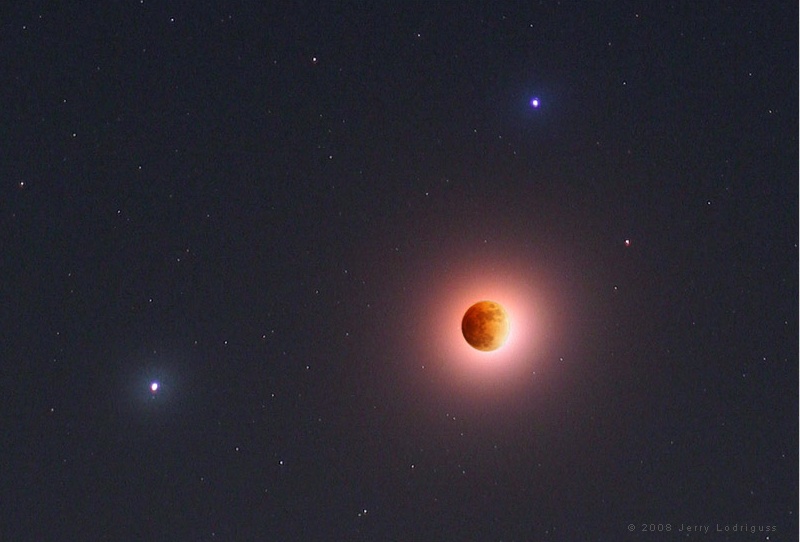
Moon watchers blessed with clear skies over the Americas, Europe, Africa and western Asia enjoyed a total lunar eclipse this week. Catching eclipsed moonlight, astroimager Jerry Lodriguss offers this view of the inspiring celestial event with the shadowed Moon accompanied by wandering planet Saturn at the left, and bright Regulus, alpha star of the constellation Leo, above. The engaging composite picture was made by combining a filtered, telephoto image of the Moon and surrounding starfield with a telescopic exposure. The combination dramatizes the reddened moonlight while clearly showing the variation of brightness and color in Earth's not-so-dark shadow across the lunar surface.