The Moon
The Moon is Earth’s only natural satellite—a rocky, cratered body about one‑quarter the diameter of Earth, orbiting at an average distance of approximately 384,400 km. It influences tides, stabilizes Earth’s axial tilt, and was formed about 4.5 billion years ago following a collision between Earth and a Mars-sized object.
Source: science.nasa.gov
APODs including "The Moon"
Aurora Over Yellowknife
22/09/2009
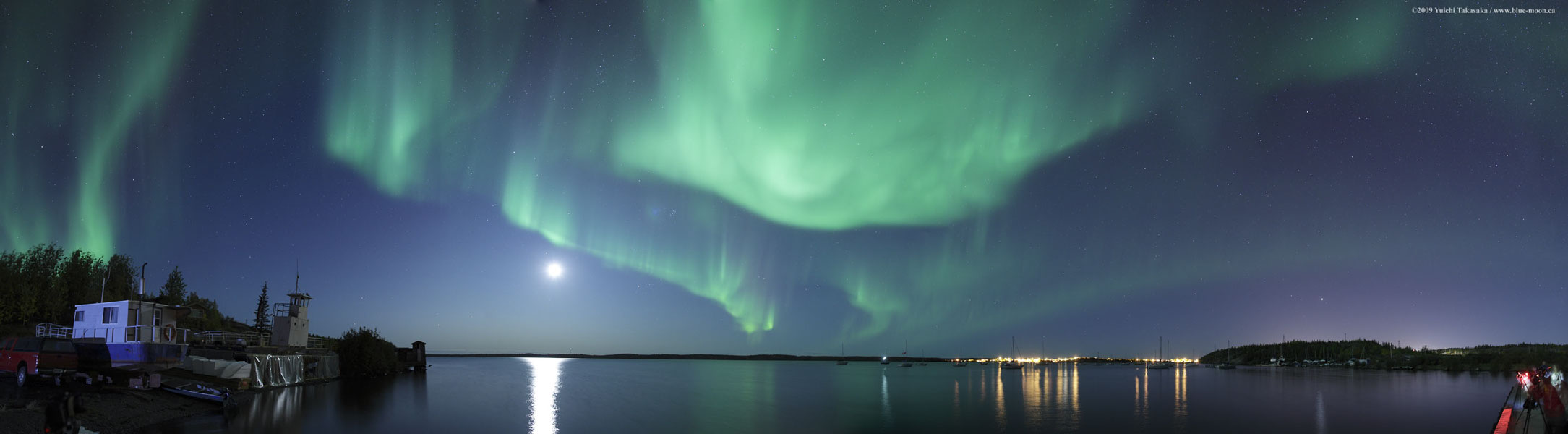
Sometimes, after your eyes adapt to the dark, a spectacular sky appears. In this case, a picturesque lake lies in front of you, beautiful green auroras flap high above you, brilliant stars shine far in the distance, and a brilliant moon shines just ahead of you. This digitally fused panorama was captured earlier this month from Yellowknife, Northwest Territories, Canada, and includes the Pleiades open cluster of stars just to the upper right of the Moon. Since auroras are ultimately started by solar activity, this current flurry of auroras is somewhat surprising, given the historic lack of sunspots and other activity on the Sun over the past two years. This time of year is known as aurora season, however, for noted average increases in auroras. The reason for the yearly increase is not known for sure, but possibly relates to the tilt of the Earth creating a more easily traversable connection between the Earth's magnetic field and the magnetic field of the Sun's changing wind streams.