The Moon
The Moon is Earth’s only natural satellite—a rocky, cratered body about one‑quarter the diameter of Earth, orbiting at an average distance of approximately 384,400 km. It influences tides, stabilizes Earth’s axial tilt, and was formed about 4.5 billion years ago following a collision between Earth and a Mars-sized object.
Source: science.nasa.gov
APODs including "The Moon"
LCROSS Centaur Impact Flash
10/10/2009
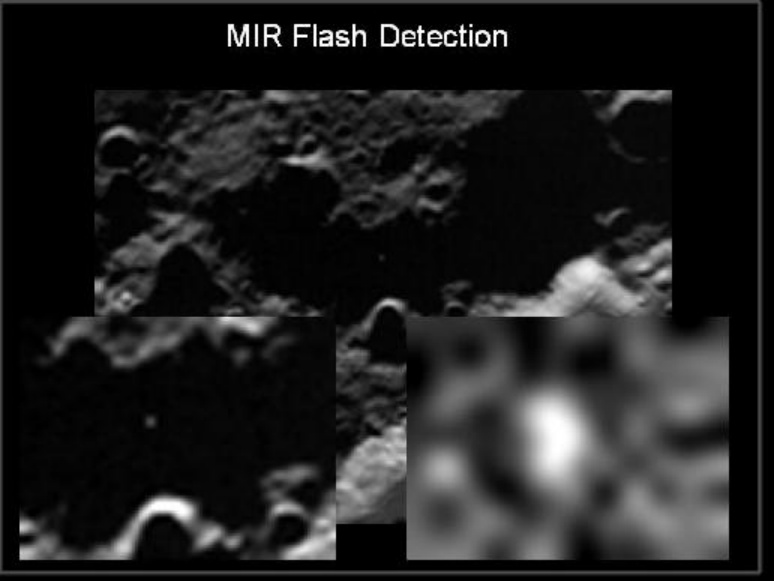
This mid-infrared image was taken in the last minutes of the LCROSS flight mission to the Moon. The small white spot (enlarged in the insets) seen within the dark shadow of lunar crater walls is the initial flash created by the impact of a spent Centaur upper stage rocket. Traveling at 1.5 miles per second, the Centaur rocket hit the lunar surface yesterday at 11:31 UT, followed a few minutes later by the shepherding LCROSS spacecraft. Earthbound observatories have reported capturing both impacts. But before crashing into the lunar surface itself, the LCROSS spacecraft's instrumentation successfully recorded close-up the details of the rocket stage impact, the resulting crater, and debris cloud. In the coming weeks, data from the challenging mission will be used to search for signs of water in the lunar material blasted from the surface.